Myths and Legends: Ancient Greece: Mythology and Literature - Introductory
It would be a tragedy if you didn't learn this epic list of words related to ancient Greek mythology and literature. Review the Greek gods and goddesses, from Aphrodite to Zeus, and encounter mythological creatures like the manticore, phoenix, and centaur. This list also covers important literary terms such as elegy, ode, and chorus.
91 words
871 learners
Learn words with Flashcards and other activities
Definition First

Other learning activities
Full list of words from this list:
-
Achilles
a mythical Greek hero of the Iliad
-
Achilles' heel
a seemingly small but actual mortal weakness
-
Amazon
one of a nation of women warriors of Scythia
-
amazon
a large, strong, and aggressive woman
-
amphitheater
an oval large stadium with tiers of seats
-
antagonist
someone who offers opposition
-
Aphrodite
goddess of love and beauty and daughter of Zeus in ancient mythology; identified with Roman Venus
-
Apollo
Greek god of light
-
Ares
Greek god of war
-
Argonaut
(Greek mythology) one of the heroes who sailed with Jason in search of the Golden Fleece
-
argonaut
someone who sets off on a daring adventure
-
Artemis
the virgin goddess of the hunt and the Moon
-
Athena
goddess of wisdom and useful arts and prudent warfare
-
centaur
a mythical being that is half man and half horse
-
Cerberus
the three-headed dog guarding the entrance to Hades
-
Charybdis
(Greek mythology) a ship-devouring whirlpool lying on the other side of a narrow strait from Scylla
-
chorus
actors who comment on the action in a classical Greek play
-
Circe
(Greek mythology) a sorceress who detained Odysseus on her island and turned his men into swine
-
colossus
someone or something that is abnormally large and powerful
-
comedy
light and humorous drama with a happy ending
-
Daedalus
an Athenian inventor who built the labyrinth of Minos
-
Demeter
(Greek mythology) goddess of fertility and protector of marriage in ancient mythology; counterpart of Roman Ceres
-
dialogue
the lines spoken by characters in drama or fiction
-
Dionysus
god of wine and fertility and drama
-
dragon
a mythological creature with a reptile body and wings
-
drama
the literary genre of works intended for the theater
-
elegy
a mournful poem; a lament for the dead
-
epic
a long narrative poem telling of a hero's deeds
-
epilogue
a short speech by an actor at the end of a play
-
foil
a person or thing that serves to contrast with another
-
Fury
(classical mythology) the hideous snake-haired monsters (usually three in number) who pursued unpunished criminals
-
god
any supernatural being worshipped as controlling the world
-
goddess
a female deity
-
Golden Fleece
in Greek mythology, a fleece of gold owned by the king of Colchis and guarded in a sacred grove by a dragon; recovered by Jason and the Argonauts
-
Gorgon
(Greek mythology) any of three winged sister monsters and the mortal Medusa who had live snakes for hair; a glance at Medusa turned the beholder to stone
-
griffin
mythical creature with an eagle's head and a lion's body
-
Hades
the god of the underworld in ancient mythology
-
halcyon
a mythical bird said to breed at the winter solstice
-
Harpy
vicious winged monster
-
Helen of Troy
(Greek mythology) the beautiful daughter of Zeus and Leda who was abducted by Paris; the Greek army sailed to Troy to get her back which resulted in the Trojan War
-
Hephaestus
the lame god of fire and metalworking in ancient mythology
-
Hera
queen of the Olympian gods in ancient Greek mythology
-
Hercules
a hero noted for his strength
-
hero
a being of great strength celebrated for bold exploits
-
Homer
ancient Greek epic poet who is believed to have written the Iliad and the Odyssey (circa 850 BC)
-
Hydra
monster with nine heads
-
Icarus
son of Daedalus
-
Iliad
a Greek epic poem describing the siege of Troy
-
immortal
not subject to death
-
labyrinth
complex system of paths in which it is easy to get lost
-
lyre
a harp used by ancient Greeks for accompaniment
-
lyric
of or relating to poetry that expresses emotion
-
manticore
a monster having the head of man and the body of a lion
-
mask
a covering to disguise or conceal the face
-
Medusa
a woman transformed into a Gorgon by Athena
-
Midas
(Greek legend) the greedy king of Phrygia who Dionysus gave the power to turn everything he touched into gold
-
mortal
subject to death
-
myth
a traditional story serving to explain a world view
-
mythology
the body of stories associated with a culture or institution
-
Nemesis
the goddess of divine retribution and vengeance
-
nemesis
a personal foe or rival that cannot be easily defeated
-
nymph
a minor nature goddess depicted as a beautiful maiden
-
ode
a lyric poem with complex stanza forms
-
Odysseus
a famous mythical Greek hero
-
Odyssey
a Greek epic poem (attributed to Homer) describing the journey of Odysseus after the fall of Troy
-
odyssey
a long wandering and eventful journey
-
Olympus
a mountain peak in northeast Greece near the Aegean coast
-
oracle
a shrine where a prophet is consulted
-
Pandora
the first woman
-
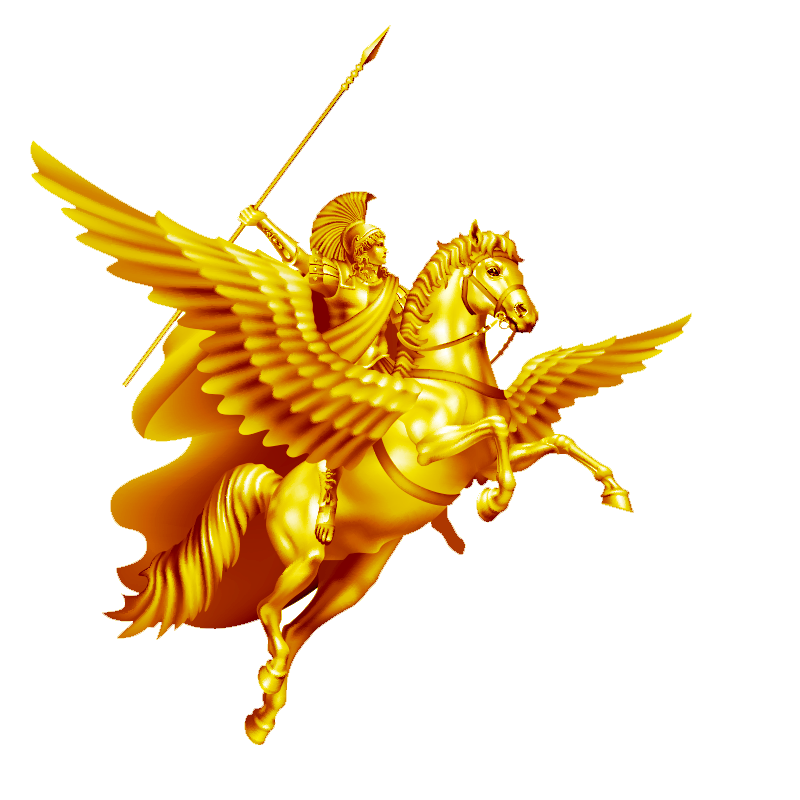
Pegasus
(Greek mythology) the immortal winged horse that sprang from the blood of the slain Medusa; was tamed by Bellerophon with the help of a bridle given him by Athena; as the flying horse of the Muses it is a symbol of highflying imagination
-
Perseus
(Greek mythology) the son of Zeus who slew Medusa (with the help of Athena and Hermes) and rescued Andromeda from a sea monster
-
phoenix
a legendary bird that burned to death and emerged reborn
-
Poseidon
the god of the sea and earthquakes in ancient mythology
-
prologue
an introductory section of a novel or other literary work
-
prophecy
a prediction uttered under divine inspiration
-
protagonist
the principal character in a work of fiction
-
Scylla
(Greek mythology) a sea nymph transformed into a sea monster who lived on one side of a narrow strait; drowned and devoured sailors who tried to escape Charybdis (a whirlpool) on the other side of the strait
-
Sphinx
(Greek mythology) a riddling winged monster with a woman's head and breast on a lion's body; daughter of Typhon
-
Styx
a river in Hades across which Charon carried dead souls
-
supernatural
not able to be explained by physical laws
-
Theseus
(Greek mythology) a hero and king of Athens who was noted for his many great deeds: killed Procrustes and the Minotaur and defeated the Amazons and united Attica
-
Titan
(Greek mythology) any of the primordial giant gods who ruled the Earth until overthrown by Zeus; the Titans were offspring of Uranus (Heaven) and Gaea (Earth)
-
titan
a person of exceptional importance and reputation
-
tragedy
drama exciting terror or pity
-
Trojan War
a great war fought between Greece and Troy
-
Troy
an ancient city in Asia Minor that was the site of the Trojan War
-
underworld
(religion) the place of the dead
-
unicorn
an imaginary horse with a long horn on its forehead
-
Zephyr
(Greek mythology) the Greek god of the west wind
-
zephyr
a slight wind
-
Zeus
the supreme god of ancient Greek mythology
Created on Tue Jan 10 16:12:50 EST 2017
(updated Fri Mar 31 11:23:50 EDT 2017)
Sign up now (it’s free!)
Whether you’re a teacher or a learner,
Vocabulary.com can put you or your class
on the path to systematic vocabulary improvement.