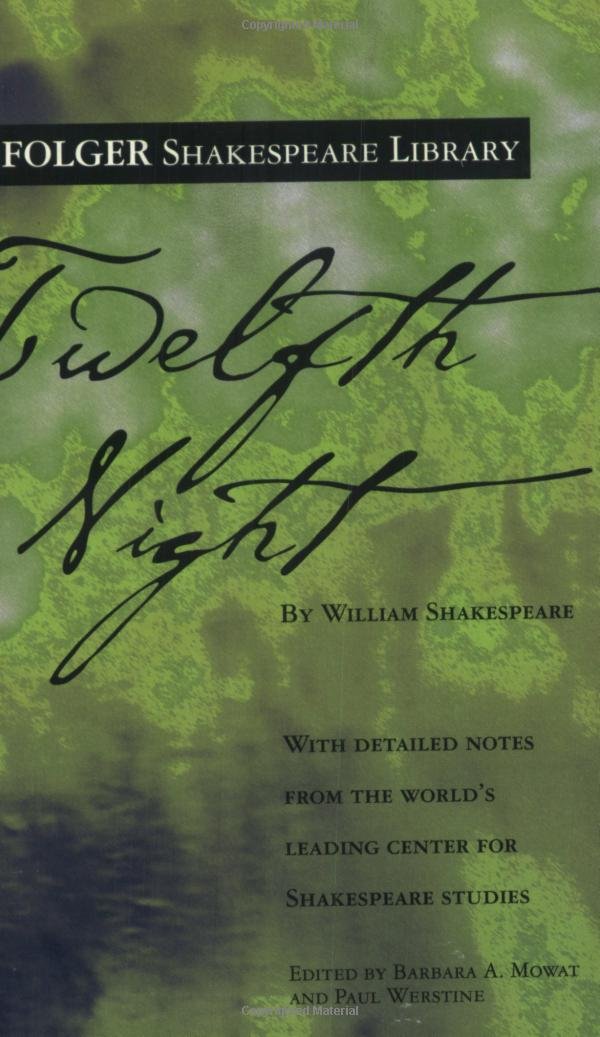
Twelfth Night: Act 4
After a shipwreck separates her from her twin brother, Viola disguises herself as a man so she can pass safely through the land of Illyria. There she befriends Duke Orsino and tries to help him win the affections of Countess Olivia. Read the full text here.
Here are links to our lists for the play: Act 1, Act 2, Act 3, Act 4, Act 5
35 words
1795 learners
Learn words with Flashcards and other activities
Definition First

Other learning activities
Full list of words from this list:
-
folly
foolish or senseless behaviorI prithee, vent thy folly somewhere else.
-
tarry
stay longer than you shouldI prithee, foolish Greek, depart from me. There's money for thee. [Giving money]. If you tarry longer I shall give worse payment.
-
battery
an assault in which the assailant makes physical contactNay, let him alone. I’ll go another way to work with him. I’ll have an action of battery against him, if there be any law in Illyria. Though I struck him first, yet it’s no matter for that.
-
barbarous
primitive in customs and cultureUngracious wretch,
Fit for the mountains and the barbarous caves,
Where manners ne'er were preached!The adjective also means "able or disposed to inflict pain or suffering," which is suggested by the situation: Toby is about to get into a sword fight with Sebastian (mistaken for Cesario). While Toby is unlikely to draw much blood, the possibility that he could hurt her beloved makes Olivia mad. Thus, she insults her uncle with the chosen definition, which could also be a threat that she will kick him out of her civilized house. -
fruitless
unproductive of successGo with me to my house,
And hear thou there how many fruitless pranks
This ruffian hath botched up, that thou thereby
Mayst smile at this. -
ruffian
a cruel and brutal fellowGo with me to my house,
And hear thou there how many fruitless pranks
This ruffian hath botched up, that thou thereby
Mayst smile at this. -
botch
make a mess of, destroy, or ruinGo with me to my house,
And hear thou there how many fruitless pranks
This ruffian hath botched up, that thou thereby
Mayst smile at this. -
relish
vigorous and enthusiastic enjoymentWhat relish is in this? How runs the stream?
Or I am mad, or else this is a dream.
Let fancy still my sense in Lethe steep;
If it be thus to dream, still let me sleep! -
fancy
imagination, especially of a casual or whimsical kindWhat relish is in this? How runs the stream?
Or I am mad, or else this is a dream.
Let fancy still my sense in Lethe steep;
If it be thus to dream, still let me sleep!As a noun, fancy also means "a predisposition to like something." While this is not how Sebastian uses the word, it is suggested by Olivia's fancy for him (mistaken for Cesario). Since Sebastian has never met Olivia, he thinks his fancy is playing tricks on him. However, because Olivia looks fancy ("decorative or ornamented" but not excessively so since she should still be in mourning), he wants his fancy (short for fantasy) to continue. -
dissemble
hide under a false appearanceWell, I'll put it on and I will dissemble myself in' t, and I would I were the first that ever dissembled in such a gown.
-
hermit
one retired from society for religious reasonsBonos dies, Sir Toby; for, as the old hermit of Prague, that never saw pen and ink, very wittily said to a niece of King Gorboduc “That that is, is,” so I, being Master Parson, am Master Parson; for what is “that” but “that” and “is” but “is”?
-
parson
someone authorized to conduct religious worshipBonos dies, Sir Toby; for, as the old hermit of Prague, that never saw pen and ink, very wittily said to a niece of King Gorboduc “That that is, is,” so I, being Master Parson, am Master Parson; for what is “that” but “that” and “is” but “is”?
-
counterfeit
make a copy of with the intent to deceiveFOOL: [disguising his voice] What ho, I say! Peace in this prison!
TOBY: The knave counterfeits well. A good knave. -
curate
a person authorized to conduct religious worshipSir Topas the curate, who comes to visit Malvolio the lunatic.A curate is "a person authorized to conduct religious worship." In position, dignity, and purpose, a curate should be the opposite of a fool (although the Latin curare means "to take care of" and both have the ability to cure low spirits). This contrast contributes to the humor of the scene for the audience. Yet within the play, the fool does not need to dress up as the curate because Malvolio can't see him; he can just change his voice to say things that would drive Malvolio mad.
-
lunatic
an insane personSir Topas the curate, who comes to visit Malvolio the lunatic.
-
fiend
an evil supernatural beingOut, hyperbolical fiend! How vexest thou this man!Originally, as the similar spellings suggest, fiend was the opposite of friend. At first, a fiend was any human enemy; this meaning is preserved in the definition of "a cruel, wicked and inhuman person." Later, a fiend became associated with the Devil, because it is the enemy of mankind. This is the meaning intended here, since the fool is pretending that Malvolio's madness comes from being possessed by a fiend, so he is there to drive it out.
-
lustrous
reflecting lightWhy, it hath bay windows transparent as barricadoes, and the clerestories toward the south-north are as lustrous as ebony; and yet complainest thou of obstruction?
-
ebony
hard dark-colored wood used to make furnitureWhy, it hath bay windows transparent as barricadoes, and the clerestories toward the south-north are as lustrous as ebony; and yet complainest thou of obstruction?
-
noble
having high or elevated characterI think nobly of the soul, and no way approve his opinion.
-
fare
proceed, get along, or succeedFare thee well.
-
dispossess
deprive someone of something, especially propertyThou shalt hold th’ opinion of Pythagoras ere I will allow of thy wits, and fear to kill a woodcock lest thou dispossess the soul of thy grandam.
-
upshot
a phenomenon that is caused by some previous phenomenonIf he may be conveniently delivered, I would he were, for I am now so far in offense with my niece that I cannot pursue with any safety this sport the upshot.
-
notorious
known widely and usually unfavorablyFool, there was never man so notoriously abused. I am as well in my wits, Fool, as thou art.When Olivia said, "let this fellow be looked to," she was more worried than mad at Malvolio's odd behavior. She did not intend for Malvolio to be treated this way. If she knew, she would be mad at the abusers. Thus, Malvolio might wish that the abusers were more notorious. But here, he is using the adverb to emphasize the extremely bad extent of the abuse.
-
wit
mental abilityThey have here propertied me, keep me in darkness, send ministers to me—asses!—and do all they can to face me out of my wits.A witty person has the "verbal skill that has the power to evoke laughter." If Malvolio had that kind of wit, he might've avoided being a target for the abusers. Ironically, a wit whom Malvolio had once observed being "put down the other day with an ordinary fool that has no more brain than a stone" is now the one he must beg to help him prove his wits to Olivia.
-
endeavor
attempt by employing effortEndeavor thyself to sleep and leave thy vain bibble-babble.
-
vain
having an exaggerated sense of self-importanceEndeavor thyself to sleep and leave thy vain bibble-babble.The adjective also means "characteristic of false pride." Aware of Malvolio's nature, the fool could intend that additional meaning here. But on the surface, as Sir Topas, he tells Malvolio to be quiet, because babbling would not help him get rid of the devil; rather, he should endeavor or "try" to sleep, so that the heavens can restore his wits.
-
convey
take something or somebody with oneself somewhereGood Fool, some ink, paper, and light; and convey what I will set down to my lady. It shall advantage thee more than ever the bearing of letter did.
-
requite
make repayment for or return somethingFOOL: Nay, I’ll ne’er believe a madman till I see his brains. I will fetch you light and paper and ink.
MALVOLIO: Fool, I’ll requite it in the highest degree. I prithee, begone. -
sustain
supply with necessities and supportI am gone, sir, and anon, sir,
I’ll be with you again,
In a trice, like to the old Vice,
Your need to sustain. -
pare
remove the edges from and cut down to the desired sizeWho with dagger of lath, in his rage and his wrath,
Cries “aha!” to the devil;
Like a mad lad, “Pare thy nails, dad!
Adieu, goodman devil.” -
adieu
a farewell remarkWho with dagger of lath, in his rage and his wrath,
Cries “aha!” to the devil;
Like a mad lad, “Pare thy nails, dad!
Adieu, goodman devil.” -
wrangle
achieve something by means of argument or trickeryFor though my soul disputes well with my sense
That this may be some error, but no madness,
Yet doth this accident and flood of fortune
So far exceed all instance, all discourse,
That I am ready to distrust mine eyes
And wrangle with my reason that persuades me
To any other trust but that I am mad— -
haste
overly eager speed and possible carelessnessBlame not this haste of mine.Olivia tells Sebastian not to blame her, but she is madly in love with him and wants to get married now. But she needs to do this secretly to avoid anger at her disrespect for the mourning customs. This realization was shown earlier when she was afraid that others had overheard her happy plans to woo Cesario. Thus she sent for Malvolio, and on hearing he's mad, said, "I'm as mad as he, if sad and merry madness equal be."
-
consecrated
made, declared, or believed to be holyIf you mean well,
Now go with me and with this holy man
Into the chantry by. There, before him
And underneath that consecrated roof,
Plight me the full assurance of your faith,
That my most jealous and too doubtful soul
May live at peace. -
plight
promise solemnly and formallyIf you mean well,
Now go with me and with this holy man
Into the chantry by. There, before him
And underneath that consecrated roof,
Plight me the full assurance of your faith,
That my most jealous and too doubtful soul
May live at peace.What Olivia asks Sebastian to do here is to "plight his troth," which means to promise his fidelity in marriage, which she hopes would save her from jealousy and doubt. Ironically, an Old English root of the word suggests that entering into a plight is dangerous, which can be seen in this definition: "a situation from which extrication is difficult." Fortunately, plighting himself to Olivia does not create a plight for Sebastian and actually saves Viola from her plight.
Created on Fri Apr 08 16:33:00 EDT 2016
(updated Tue May 24 12:59:30 EDT 2022)
Sign up now (it’s free!)
Whether you’re a teacher or a learner,
Vocabulary.com can put you or your class
on the path to systematic vocabulary improvement.