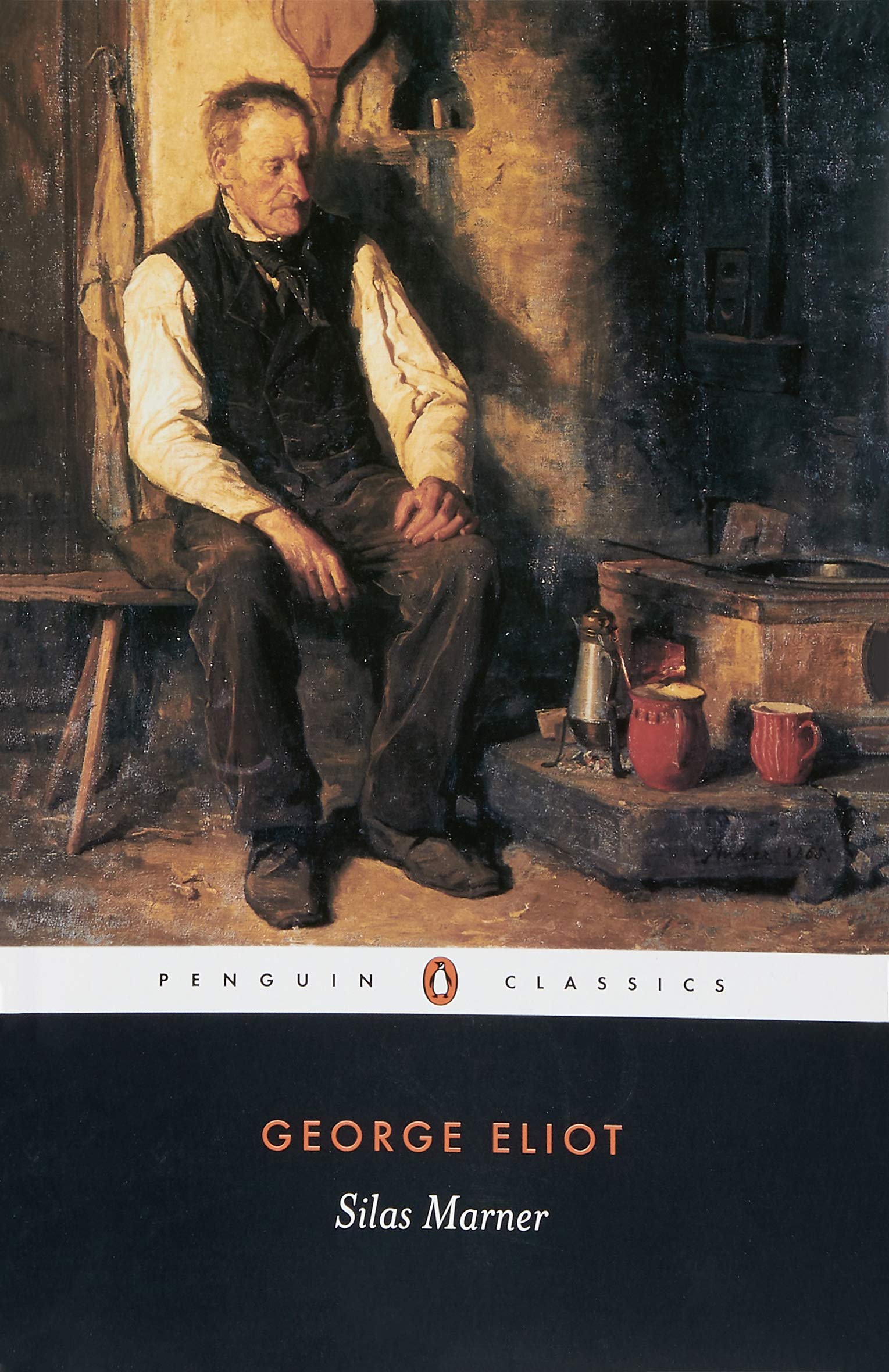
Silas Marner: Chapters 16–18
After he is falsely accused of stealing money from his church, Silas Marner is abandoned by everyone, even his fiancée. He flees to a small rural village and attempts to isolate himself from the world — but when he takes in an abandoned child, his life changes forever. Read the full text here.
Here are links to our lists for the novel: Chapters 1–5, Chapters 6–10, Chapters 11–15, Chapters 16–18, Chapter 19–Conclusion
40 words
130 learners
Learn words with Flashcards and other activities
Definition First

Other learning activities
Full list of words from this list:
-
divine
perceive through some inexplicable perceptive powersOften the soul is ripened into fuller goodness while age has spread an ugly film, so that mere glances can never divine the preciousness of the fruit.
-
veracious
habitually speaking the truthBut the years have not been so cruel to Nancy. The firm yet placid mouth, the clear, veracious glance of the brown eyes, speak now of a nature that has been tested and has kept its highest qualities; and even the costume, with its dainty neatness and purity, has more significance now the coquetries of youth can have nothing to do with it.
-
muster
summon up, call forth, or bring togetherShe surely divines that there is some one behind her who is thinking about her very particularly, and mustering courage to come to her side as soon as they are out in the lane, else why should she look rather shy, and take care not to turn away her head from her father Silas, to whom she keeps murmuring little sentences as to who was at church, and who was not at church, and how pretty the red mountain-ash is over the rectory wall!
-
interior
the region that is inside of somethingThe presence of this happy animal life was not the only change
which had come over the interior of the stone cottage. -
exceptional
surpassing what is common or usual or expectedNobody was jealous of the weaver, for he was regarded as an exceptional person, whose claims on neighbourly help were not to be matched in Raveloe.
-
convenience
a small mechanical device or toolFor Silas would not consent to have a grate and oven added to his conveniences: he loved the old brick hearth as he had loved his brown pot—and was it not there when he had found Eppie?
-
tolerant
showing respect for the rights or opinions of othersThe gods of the hearth exist for us still; and let all new faith be tolerant of that fetishism, lest it bruise its own roots.
-
appropriate
take possession of by forceBy seeking what was needful for Eppie, by sharing the effect that everything produced on her, he had himself come to appropriate the forms of custom and belief which were the mould of Raveloe life; and as, with reawakening sensibilities, memory also reawakened, he had begun to ponder over the elements of his old faith, and blend them with his new impressions, till he recovered a consciousness of unity between his past and present.
-
reticence
the trait of being uncommunicativeFor it would have been impossible for him to hide from Eppie that she was not his own child: even if the most delicate reticence on the point could have been expected from Raveloe gossips in her presence, her own questions about her mother could not have been parried, as she grew up, without that complete shrouding of the past which would have made a painful barrier between their minds.
-
influence
the effect of one thing or person on anotherThe tender and peculiar love with which Silas had reared her in almost inseparable companionship with himself, aided by the seclusion of their dwelling, had preserved her from the lowering influences of the village talk and habits, and had kept her mind in that freshness which is sometimes falsely supposed to be an invariable attribute of rusticity.
-
exalt
raise in rank, character, or statusPerfect love has a breath of poetry which can exalt the relations of the least-instructed human beings; and this breath of poetry had surrounded Eppie from the time when she had followed the bright gleam that beckoned her to Silas's hearth
-
subdued
softened in tone"And what did he say?" said Silas, still in the same subdued way, as if he were anxious lest he should fall into the slightest tone that was not for Eppie's good.
-
emphatically
in a forceful manner; with emphasis"Yes, child, nobody could behave better," said Silas, emphatically. "He's his mother's lad."
-
burden
a serious or difficult concernI shall get older and helplesser, and be a burden on you, belike, if I don't go away from you altogether. Not as I mean you'd think me a burden—I know you wouldn't—but it 'ud be hard upon you; and when I look for'ard to that, I like to think as you'd have somebody else besides me—somebody young and strong, as'll outlast your own life, and take care on you to the end.
-
discourse
carry on a conversationWhile Silas and Eppie were seated on the bank discoursing in the fleckered shade of the ash tree, Miss Priscilla Lammeter was resisting her sister's arguments, that it would be better to take tea at the Red House, and let her father have a long nap, than drive home to the Warrens so soon after dinner.
-
reign
a period during which something or somebody is dominantA great change has come over the dark wainscoted parlour since we saw it in Godfrey's bachelor days, and under the wifeless reign of the old Squire.
-
filial
relating to or characteristic of or befitting an offspringAll other signs of sporting and outdoor occupation Nancy has removed to another room; but she has brought into the Red House the habit of filial reverence, and preserves sacredly in a place of honour these relics of her husband's departed father.
-
contented
satisfied or showing satisfaction with things as they areI'm contented with the blessings we have, if he could be contented.
-
impetuous
marked by violent force"It drives me past patience," said Priscilla, impetuously, "that way o' the men—always wanting and wanting, and never easy with what they've got
-
hanker
desire strongly or persistentlyIt's natural he should be disappointed at not having any children: every man likes to have somebody to work for and lay by for, and he always counted so on making a fuss with 'em when they were little. There's many another man 'ud hanker more than he does.
-
sufficient
of a quantity that can fulfill a need or requirementNancy seldom accompanied him; for the women of her generation—unless, like Priscilla, they took to outdoor management—were not given to much walking beyond their own house and garden, finding sufficient exercise in domestic duties.
-
reverential
feeling or manifesting profound respect or aweBut Nancy's Sunday thoughts were rarely quite out of keeping with the devout and reverential intention implied by the book spread open before her.
-
rectitude
righteousness as a consequence of being honorable and honestShe was not theologically instructed enough to discern very clearly the relation between the sacred documents of the past which she opened without method, and her own obscure, simple life; but the spirit of rectitude, and the sense of responsibility for the effect of her conduct on others, which were strong elements in Nancy's character, had made it a habit with her to scrutinize her past feelings and actions with self-questioning solicitude.
-
forbearance
good-natured tolerance of delay or incompetenceShe recalled the small details, the words, tones, and looks, in the critical scenes which had opened a new epoch for her by giving her a deeper insight into the relations and trials of life, or which had called on her for some little effort of forbearance, or of painful adherence to an imagined or real duty—asking herself continually whether she had been in any respect blamable.
-
rumination
a calm, lengthy, intent considerationThis excessive rumination and self-questioning is perhaps a morbid habit inevitable to a mind of much moral sensibility when shut out from its due share of outward activity and of practical claims on its affections—inevitable to a noble-hearted, childless woman, when her lot is narrow.
-
scruple
uneasiness about the fitness of an action"I can do so little—have I done it all well?" is the perpetually recurring thought; and there are no voices calling her away from that soliloquy, no peremptory demands to divert energy from vain regret or superfluous scruple.
-
vindication
the act of defending against criticism or censureThe vindication of the loved object is the best balm affection can find for its wounds:—"A man must have so much on his mind," is the belief by which a wife often supports a cheerful face under rough answers and unfeeling words.
-
reconcile
come to termsAnd Nancy's deepest wounds had all come from the perception that the absence of children from their hearth was dwelt on in her husband's mind as a privation to which he could not reconcile himself.
-
privation
the act of stripping someone of food, money, or rightsHad she done everything in her power to lighten Godfrey's privation?
-
propriety
correct behaviorOn all the duties and proprieties of life, from filial behaviour to the arrangements of the evening toilette, pretty Nancy Lammeter, by the time she was three-and-twenty, had her unalterable little code, and had formed every one of her habits in strict accordance with that code.
-
principle
rule of personal conductIt was one of those rigid principles, and no petty egoistic feeling, which had been the ground of Nancy's difficult resistance to her husband's wish.
-
providence
a manifestation of God's foresightful care for his creaturesTo adopt a child, because children of your own had been denied you, was to try and choose your lot in spite of Providence: the adopted child, she was convinced, would never turn out well, and would be a curse to those who had wilfully and rebelliously sought what it was clear that, for some high reason, they were better without.
-
remonstrance
the act of expressing earnest opposition or protest"But why should you think the child would turn out ill?" said Godfrey, in his remonstrances. "She has thriven as well as child can do with the weaver; and he adopted her.
-
doctrine
a belief accepted as authoritative by some group or schoolIt might seem singular that Nancy—with her religious theory pieced together out of narrow social traditions, fragments of church doctrine imperfectly understood, and girlish reasonings on her small experience—should have arrived by herself at a way of thinking so nearly akin to that of many devout people, whose beliefs are held in the shape of a system quite remote from her knowledge—singular, if we did not know that human beliefs, like all other natural growths, elude the barriers of system.
-
obstinacy
resolute adherence to your own ideas or desiresGodfrey was not insensible to her loving effort, and did Nancy no injustice as to the motives of her obstinacy.
-
breach
a personal or social separationWhatever else he did, he could not make an irreparable breach between himself and this long-loved wife.
-
retribution
a justly deserved penaltyIn Godfrey's case there were further reasons why his thoughts should be continually solicited by this one point in his lot: his conscience, never thoroughly easy about Eppie, now gave his childless home the aspect of a retribution; and as the time passed on, under Nancy's refusal to adopt her, any retrieval of his error became more and more difficult.
-
kinship
relatedness or connection by blood or marriage or adoptionThe blood rushed to Nancy's face and neck at this surprise and shame, for she had been bred up to regard even a distant kinship with crime as a dishonour.
-
reproach
a mild rebuke or criticism"But you wouldn't have married me then, Nancy, if I'd told you," said Godfrey, urged, in the bitterness of his self-reproach, to prove to himself that his conduct had not been utter folly. "You may think you would now, but you wouldn't then. With your pride and your father's, you'd have hated having anything to do with me after the talk there'd have been."
-
acknowledge
express recognition of the presence or existence of"It'll be different coming to us, now she's grown up," said Nancy, shaking her head sadly. "But it's your duty to acknowledge her and provide for her; and I'll do my part by her, and pray to God Almighty to make her love me."
Created on Mon Apr 04 20:57:29 EDT 2016
(updated Thu Sep 20 15:23:33 EDT 2018)
Sign up now (it’s free!)
Whether you’re a teacher or a learner,
Vocabulary.com can put you or your class
on the path to systematic vocabulary improvement.