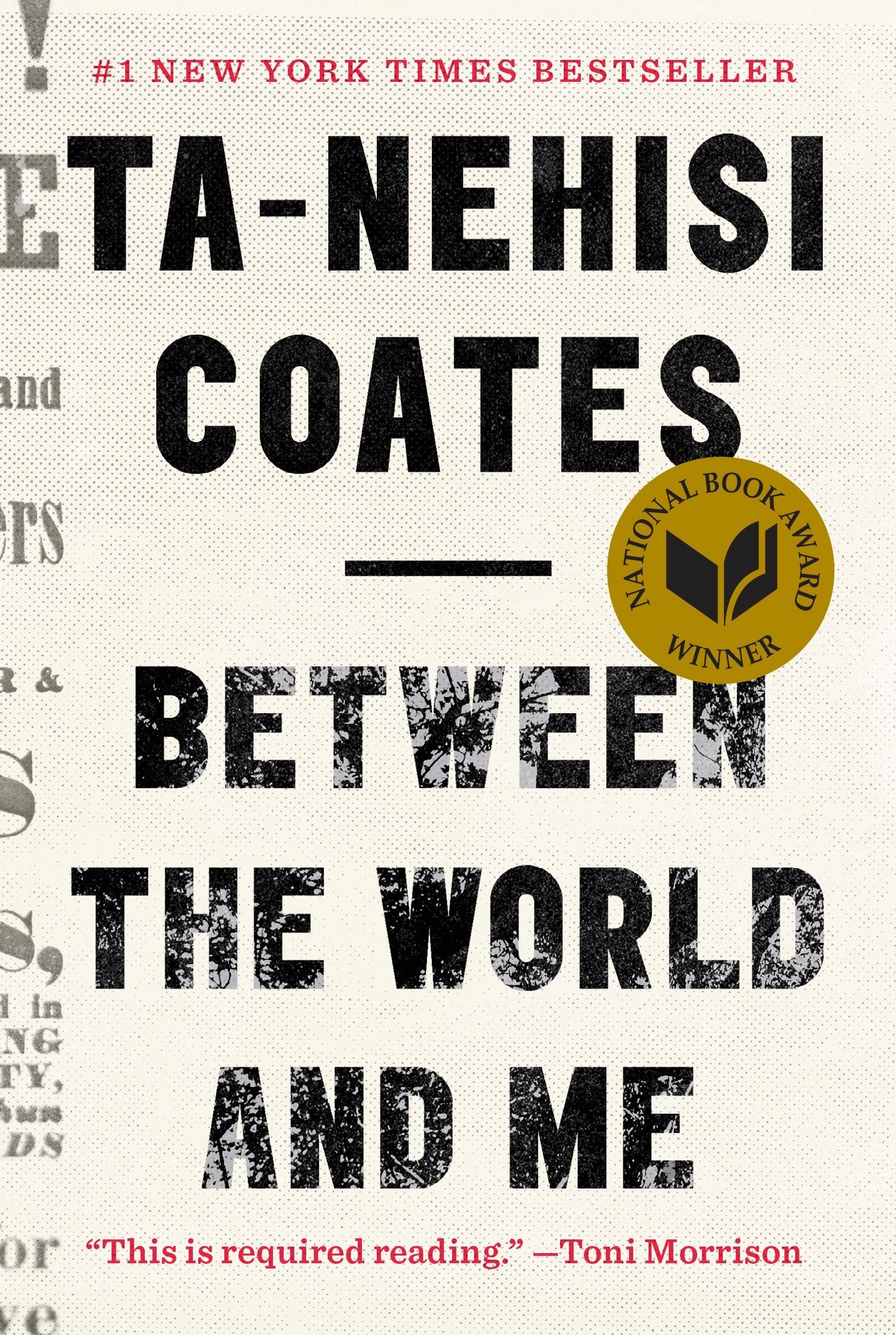
Learn words with Flashcards and other activities
Definition First

Other learning activities
Full list of words from this list:
-
deify
exalt to the position of a GodAmericans deify democracy in a way that allows for a dim awareness that they have, from time to time, stood in defiance of their God.
-
heresy
a belief that rejects the orthodox tenets of a religionBut democracy is a forgiving God and America’s heresies—torture, theft, enslavement—are so common among individuals and nations that none can declare themselves immune.
-
physiognomy
the human faceAnd the process of naming “the people” has never been a matter of genealogy and physiognomy so much as one of hierarchy.
-
preeminence
high status importance owing to marked superiorityBut the belief in the preeminence of hue and hair, the notion that these factors can correctly organize a society and that they signify deeper attributes, which are indelible—this is the new idea at the heart of these new people who have been brought up hopelessly, tragically, deceitfully, to believe that they are white.
-
exceptional
surpassing what is common or usual or expectedAmerica believes itself exceptional, the greatest and noblest nation ever to exist, a lone champion standing between the white city of democracy and the terrorists, despots, barbarians, and other enemies of civilization.
-
prerogative
a right reserved exclusively by a person or groupAnd destruction is merely the superlative form of a dominion whose prerogatives include friskings, detainings, beatings, and humiliations.
-
visceral
relating to or affecting the internal organsBut all our phrasing—race relations, racial chasm, racial justice, racial profiling, white privilege, even white supremacy—serves to obscure that racism is a visceral experience, that it dislodges brains, blocks airways, rips muscle, extracts organs, cracks bones, breaks teeth.
-
specious
deceptively pleasingAnd I was sad for these people, much as I was sad for the host and sad for all the people out there watching and reveling in a specious hope.
-
inviolable
immune to attack; incapable of being tampered withThe men who had left his body in the street like some awesome declaration of their inviolable power would never be punished.
-
upshot
a phenomenon that is caused by some previous phenomenonThe nakedness is not an error, nor pathology. The nakedness is the correct and intended result of policy, the predictable upshot of people forced for centuries to live under fear.
-
jeopardy
a source of dangerHe had already learned the lesson he would teach me that day: that his body was in constant jeopardy.
-
brandish
exhibit aggressivelyThere the boy stood, with the gun brandished, which he slowly untucked, tucked, then untucked once more, and in his small eyes I saw a surging rage that could, in an instant, erase my body.
-
tenacious
stubbornly unyieldingI knew that my portion of the American galaxy, where bodies were enslaved by a tenacious gravity, was black and that the other, liberated portion was not.
-
elicit
call forth, as an emotion, feeling, or responseShe was teaching me how to ruthlessly interrogate the subject that elicited the most sympathy and rationalizing—myself.
-
despotic
characteristic of an absolute ruler or absolute ruleThe guns seemed to address this country, which invented the streets that secured them with despotic police, in its primary language—violence.
-
insidious
working or spreading in a hidden and usually injurious wayYou do not give your precious body to the billy clubs of Birmingham sheriffs nor to the insidious gravity of the streets.
-
esoteric
understandable only by an enlightened inner circleI loved him because he made it plain, never mystical or esoteric, because his science was not rooted in the actions of spooks and mystery gods but in the work of the physical world.
-
pragmatist
an adherent of a theory of observable practical consequencesMalcolm was the first political pragmatist I knew, the first honest man I’d ever heard.
-
proscribe
command againstMalcolm spoke like a man who was free, like a black man above the laws that proscribed our imagination.
-
reclamation
rescuing from error and returning to a rightful courseMy reclamation would be accomplished, like Malcolm’s, through books, through my own study and exploration.
-
purview
the range of interest or activity that can be anticipatedI had been reading and writing beyond the purview of the schools all my life.
-
eclectic
selecting what seems best of various styles or ideasMy only Mecca was, is, and shall always be Howard University. I have tried to explain this to you many times. You say that you hear me, that you understand, but I am not so sure that the force of my Mecca—The Mecca—can be translated into your new and eclectic tongue.
-
proximity
the region close around a person or thingAnd whereas most other historically black schools were scattered like forts in the great wilderness of the old Confederacy, Howard was in Washington, D.C.—Chocolate City—and thus in proximity to both federal power and black power.
-
diaspora
the dispersion of something that was originally localizedThe history, the location, the alumni combined to create The Mecca— the crossroads of the black diaspora.
-
sentimental
marked by tender, romantic, or nostalgic emotionThey were rebelling against the history books that spoke of black people only as sentimental “firsts”—first black five-star general, first black congressman, first black mayor—always presented in the bemused manner of a category of Trivial Pursuit.
-
eddy
a miniature whirlpool or whirlwindI felt myself at the bridge of a great ship that I could not control because C.L.R. James was a great wave and Basil Davidson was a swirling eddy, tossing me about. Things I believed merely a week earlier, ideas I had taken from one book, could be smashed to splinters by another.
-
rationalization
a defense mechanism explaining actions non-threateninglyI wanted to learn to write, which was ultimately, still, as my mother had taught me, a confrontation with my own innocence, my own rationalizations.
-
spectrum
a broad range of related objects, values, or qualitiesThese truths carried the black body beyond slogans and gave it color and texture and thus reflected the spectrum I saw out on the Yard more than all of my alliterative talk of guns or revolutions or paeans to the lost dynasties of African antiquity.
-
enclave
an enclosed territory that is culturally distinctBack then, I knew, for instance, that just outside of Washington, D.C., there was a great enclave of black people who seemed, as much as anyone, to have seized control of their bodies.
-
disabuse
free somebody from an erroneous beliefMy history professors thought nothing of telling me that my search for myth was doomed, that the stories I wanted to tell myself could not be matched to truths. Indeed, they felt it their duty to disabuse me of my weaponized history.
-
agitprop
political propaganda communicated via art and literatureMy professor, Linda Heywood, was slight and bespectacled, spoke with a high Trinidadian lilt that she employed like a hammer against young students like me who confused agitprop with hard study.
-
simian
relating to or resembling an ape or a monkeyIn my survey course of America, I’d seen portraits of the Irish drawn in the same ravenous, lustful, and simian way. Perhaps there had been other bodies, mocked, terrorized, and insecure.
-
pariah
a person who is rejected from society or homePerhaps being named “black” had nothing to do with any of this; perhaps being named “black” was just someone’s name for being at the bottom, a human turned to object, object turned to pariah.
-
inherent
existing as an essential constituent or characteristicThere was nothing holy or particular in my skin; I was black because of history and heritage. There was no nobility in falling, in being bound, in living oppressed, and there was no inherent meaning in black blood.
-
profligate
unrestrained by convention or moralityOn the outside black people controlled nothing, least of all the fate of their bodies, which could be commandeered by the police; which could be erased by the guns, which were so profligate; which could be raped, beaten, jailed.
-
edict
a legally binding command or decisionI think now of the old rule that held that should a boy be set upon in someone else's chancy hood, his friends must stand with him, and they must all take their beating together. I now know that within this edict lay the key to all living.
-
parable
a short moral storyFor this woman, enslavement is not a parable. It is damnation. It is the never-ending night. And the length of that night is most of our history.
-
nuance
a subtle difference in meaning or opinion or attitudeYou must struggle to truly remember this past in all its nuance, error, and humanity.
-
responsible
worthy of or requiring trust; held accountableIndeed, you must be responsible for the worst actions of other black bodies, which, somehow, will always be assigned to you.
-
furtive
secret and slyAnd you must be responsible for the bodies of the powerful—the policeman who cracks you with a nightstick will quickly find his excuse in your furtive movements.
Created on Mon Mar 14 14:30:08 EDT 2016
(updated Wed Jan 10 12:12:18 EST 2018)
Sign up now (it’s free!)
Whether you’re a teacher or a learner,
Vocabulary.com can put you or your class
on the path to systematic vocabulary improvement.