physicist
Other forms: physicists
A physicist is a scientist who studies and is trained in physics, which is the study of nature, especially how matter and energy behave.
Do you ever wonder how things work? If you're interested in what makes magnets attract iron or what's happening in atoms, then maybe you should become a physicist. Physicists study physics, which is related to the word physical. Physicists are interested in everything that physically exists, from tiny gadgets to massive stars. It takes many years of school to become a physicist, and physicists work on complex projects such as space travel and new energy sources.
-
a scientist trained in physicsexamples:Al-Hasan ibn al-Haythaman Egyptian polymath (born in Iraq) whose research in geometry and optics was influential into the 17th century; established experiments as the norm of proof in physics (died in 1040)Philip Warren AndersonUnited States physicist who studied the electronic structure of magnetic and disordered systems (1923-)Sir Edward Victor AppletonEnglish physicist remembered for his studies of the ionosphere (1892-1966)ArchimedesGreek mathematician and physicist noted for his work in hydrostatics and mechanics and geometry (287-212 BC)Svante August ArrheniusSwedish chemist and physicist noted for his theory of chemical dissociation (1859-1927)Amedeo AvogadroItalian physicist noted for his work on gases; proposed what has come to be called Avogadro's law (1776-1856)John BardeenUnited States physicist who won the Nobel prize for physics twice (1908-1991)Antoine Henri BecquerelFrench physicist who discovered that rays emitted by uranium salts affect photographic plates (1852-1908)Daniel BernoulliSwiss physicist who contributed to hydrodynamics and mathematical physics (1700-1782)Ludwig BoltzmannAustrian physicist who contributed to the kinetic theory of gases (1844-1906)Bertram BrockhouseCanadian physicist who bounced neutron beams off of atomic nuclei to study the structure of matter (1918-2003)Nicolas Leonard Sadi CarnotFrench physicist who founded thermodynamics (1796-1832)Henry CavendishBritish chemist and physicist who established that water is a compound of hydrogen and oxygen and who calculated the density of the earth (1731-1810)Jacques Alexandre Cesar CharlesFrench physicist and author of Charles's law which anticipated Gay-Lussac's law (1746-1823)Charles Augustin de CoulombFrench physicist famous for his discoveries in the field of electricity and magnetism; formulated Coulomb's Law (1736-1806)Sir William CrookesEnglish chemist and physicist; discovered thallium; invented the radiometer and studied cathode rays (1832-1919)Pierre CurieFrench physicist; husband of Marie Curie (1859-1906)John DaltonEnglish chemist and physicist who formulated atomic theory and the law of partial pressures; gave the first description of red-green color blindness (1766-1844)Sir James DewarScottish chemist and physicist noted for his work in cryogenics and his invention of the Dewar flask (1842-1923)Christian Johann DopplerAustrian physicist famous for his discovery of the Doppler effect (1803-1853)Albert Einsteinphysicist born in Germany who formulated the special theory of relativity and the general theory of relativity; Einstein also proposed that light consists of discrete quantized bundles of energy (later called photons) (1879-1955)Leo Esakiphysicist honored for advances in solid state electronics (born in Japan in 1925)Gabriel Daniel FahrenheitGerman physicist who invented the mercury thermometer and developed the scale of temperature that bears his name (1686-1736)Michael Faradaythe English physicist and chemist who discovered electromagnetic induction (1791-1867)Gustav Theodor FechnerGerman physicist who founded psychophysics; derived Fechner's law on the basis of early work by E. H. Weber (1801-1887)Jean Bernard Leon FoucaultFrench physicist who determined the speed of light and showed that it travels slower in water than in air; invented the Foucault pendulum and the gyroscope (1819-1868)Baron Jean Baptiste Joseph FourierFrench mathematician who developed Fourier analysis and studied the conduction of heat (1768-1830)James FranckUnited States physicist (born in Germany) who with Gustav Hertz performed an electron scattering experiment that proved the existence of the stationary energy states postulated by Niels Bohr (1882-1964)Augustin Jean FresnelFrench physicist who invented polarized light and invented the Fresnel lens (1788-1827)Emil Klaus Julius FuchsBritish physicist who was born in Germany and fled Nazi persecution; in the 1940s he passed secret information to the USSR about the development of the atom bomb in the United States (1911-1988)Dennis GaborBritish physicist (born in Hungary) noted for his work on holography (1900-1979)George GamowUnited States physicist (born in Russia) who was a proponent of the big-bang theory and who did research in radioactivity and suggested the triplet code for DNA (1904-1968)Joseph Louis Gay-LussacFrench chemist and physicist who first isolated boron and who formulated the law describing the behavior of gases under constant pressure (1778-1850)Hans GeigerGerman physicist who developed the Geiger counter (1882-1945)William GilbertEnglish court physician noted for his studies of terrestrial magnetism (1540-1603)Robert Hutchings GoddardUnited States physicist who developed the first successful liquid-fueled rocket (1882-1945)Stephen William HawkingEnglish theoretical physicist (born in 1942)Oliver HeavisideEnglish physicist and electrical engineer who helped develop telegraphic and telephonic communications; in 1902 (independent of A. E. Kennelly) he suggested the existence of an atmospheric layer that reflects radio waves back to earth (1850-1925)Baron Hermann Ludwig Ferdinand von HelmholtzGerman physiologist and physicist (1821-1894)Joseph HenryUnited States physicist who studied electromagnetic phenomena (1791-1878)Heinrich Rudolph HertzGerman physicist who was the first to produce electromagnetic waves artificially (1857-1894)Victor Franz HessUnited States physicist (born in Austria) who was a discoverer of cosmic radiation (1883-1964)Christiaan HuygensDutch physicist who first formulated the wave theory of light (1629-1695)Jean-Frederic Joliot-CurieFrench nuclear physicist who was Marie Curie's assistant and who worked with Marie Curie's daughter who he married (taking the name Joliot-Curie); he and his wife discovered how to synthesize new radioactive elements (1900-1958)Irene Joliot-CurieFrench physicist who (with her husband) synthesized new chemical elements (1897-1956)James Prescott JouleEnglish physicist who established the mechanical theory of heat and discovered the first law of thermodynamics (1818-1889)Alfred KastlerFrench physicist (1902-1984)First Baron KelvinBritish physicist who invented the Kelvin scale of temperature and pioneered undersea telegraphy (1824-1907)Gustav Robert KirchhoffGerman physicist who with Bunsen pioneered spectrum analysis and formulated two laws governing electric networks (1824-1887)Lev Davidovich LandauSoviet physicist who worked on low temperature physics (1908-1968)Philipp LenardGerman physicist who studied cathode rays (1862-1947)Gabriel LippmannFrench physicist who developed the first color photographic process (1845-1921)Sir Oliver Joseph LodgeEnglish physicist who studied electromagnetic radiation and was a pioneer of radiotelegraphy (1851-1940)Hendrik Antoon LorentzDutch physicist noted for work on electromagnetic theory (1853-1928)Ernst MachAustrian physicist and philosopher who introduced the Mach number and who founded logical positivism (1838-1916)James Clerk MaxwellScottish physicist whose equations unified electricity and magnetism and who recognized the electromagnetic nature of light (1831-1879)Fritz W. MeissnerGerman physicist (1882-1974)Albert Abraham MichelsonUnited States physicist (born in Germany) who collaborated with Morley in the Michelson-Morley experiment (1852-1931)Robert Andrews MillikanUnited States physicist who isolated the electron and measured its charge (1868-1953)Louis Eugene Felix NeelFrench physicist noted for research on magnetism (born in 1904)Walther Hermann NernstGerman physicist and chemist who formulated the third law of thermodynamics (1864-1941)Sir Isaac NewtonEnglish mathematician and physicist; remembered for developing the calculus and for his law of gravitation and his three laws of motion (1642-1727)Hans Christian OerstedDanish physicist (1777-1851)Georg Simon OhmGerman physicist who formulated Ohm's law (1787-1854)Henri PitotFrench physicist for whom the Pitot tube was named (1695-1771)Max Karl Ernst Ludwig PlanckGerman physicist whose explanation of blackbody radiation in the context of quantized energy emissions initiated quantum theory (1858-1947)Cecil Frank PowellEnglish physicist who discovered the pion (the first known meson) which is a subatomic particle involved in holding the nucleus together (1903-1969)Aleksandr Mikjailovich ProkhorovRussian physicist whose research into ways of moving electrons around atoms led to the development of masers and lasers for producing high-intensity radiation (1916-2002)Third Baron RayleighEnglish physicist who studied the density of gases and discovered argon; made important contributions to acoustic theory (1842-1919)Rene Antoine Ferchault de ReaumurFrench physicist who invented the alcohol thermometer (1683-1757)Wilhelm Konrad RoentgenGerman physicist who discovered x-rays and developed roentgenography (1845-1923)First Baron Rutherford of NelsonBritish physicist (born in New Zealand) who discovered the atomic nucleus and proposed a nuclear model of the atom (1871-1937)William Bradford ShockleyUnited States physicist (born in England) who contributed to the development of the electronic transistor (1910-1989)Benjamin ThompsonEnglish physicist (born in America) who studied heat and friction; experiments convinced him that heat is caused by moving particles (1753-1814)Sir Joseph John ThomsonEnglish physicist who experimented with the conduction of electricity through gases and who discovered the electron and determined its charge and mass (1856-1940)Sir George Paget ThomsonEnglish physicist (son of Joseph John Thomson) who was a co-discoverer of the diffraction of electrons by crystals (1892-1975)Evangelista TorricelliItalian physicist who invented the mercury barometer (1608-1647)John TyndallBritish physicist (born in Ireland) remembered for his experiments on the transparency of gases and the absorption of radiant heat by gases and the transmission of sound through the atmosphere; he was the first person to explain why the daylight sky is blue (1820-1893)James Alfred Van AllenUnited States physicist who discovered two belts of charged particles from the solar wind trapped by the Earth's magnetic field (born in 1914)Robert Jemison Van de GraaffUnited States physicist (1901-1967)Johannes Diderik van der WaalsDutch physicist (1837-1923)John Hasbrouck Van VleckUnited States physicist (1899-1980)Conte Alessandro Giuseppe Antonio Anastasio VoltaItalian physicist after whom the volt is named; studied electric currents and invented the voltaic pile (1745-1827)Wilhelm Eduard WeberGerman physicist and brother of E. H. Weber; noted for his studies of terrestrial magnetism (1804-1891)Steven WeinbergUnited States theoretical physicist (born in 1933)Sir Charles WheatstoneEnglish physicist and inventor who devised the Wheatstone bridge (1802-1875)Robert Woodrow WilsonUnited States physicist honored for his work on cosmic microwave radiation (born in 1918)William Hyde WollastonEnglish chemist and physicist who discovered palladium and rhodium and demonstrated that static and current electricity are the same (1766-1828)Yang Chen NingUnited States physicist (born in China) who collaborated with Tsung Dao Lee in disproving the principle of conservation of parity (born in 1922)Thomas YoungBritish physicist and Egyptologist; he revived the wave theory of light and proposed a three-component theory of color vision; he also played an important role in deciphering the hieroglyphics on the Rosetta Stone (1773-1829)Pieter ZeemanDutch physicist honored for his research on the influence of magnetism on radiation which showed that light is radiated by the motion of charged particles in an atom (1865-1943)Vladimir Kosma ZworykinUnited States physicist who invented the iconoscope (1889-1982)types:acousticiana physicist who specializes in acousticsbiophysicista physicist who applies the methods of physics to biologynuclear physicista physicist who specializes in nuclear physicsCharles Hard Townes, Charles Townes, TownesUnited States physicist who developed the laser and maser principles for producing high-intensity radiation (1915-)astrophysicistan astronomer who studies the physical properties of celestial bodiescosmologistan astronomer who studies the evolution and space-time relations of the universetype of:scientista person with advanced knowledge of one or more sciences
- MLA
- APA
- Chicago
Vocabulary lists containing physicist
Calling all budding geniuses! Don't let inertia stop you from learning these words related to physicist Albert Einstein and his work. Best known for developing the theory of relativity, Einstein is widely considered to be one of the greatest scientists of all time. If these words give you the momentum to learn more about physics, you can practice our introductory physics list here.

In this engaging blend of science and history, Steve Sheinkin traces the development of the atomic bomb.
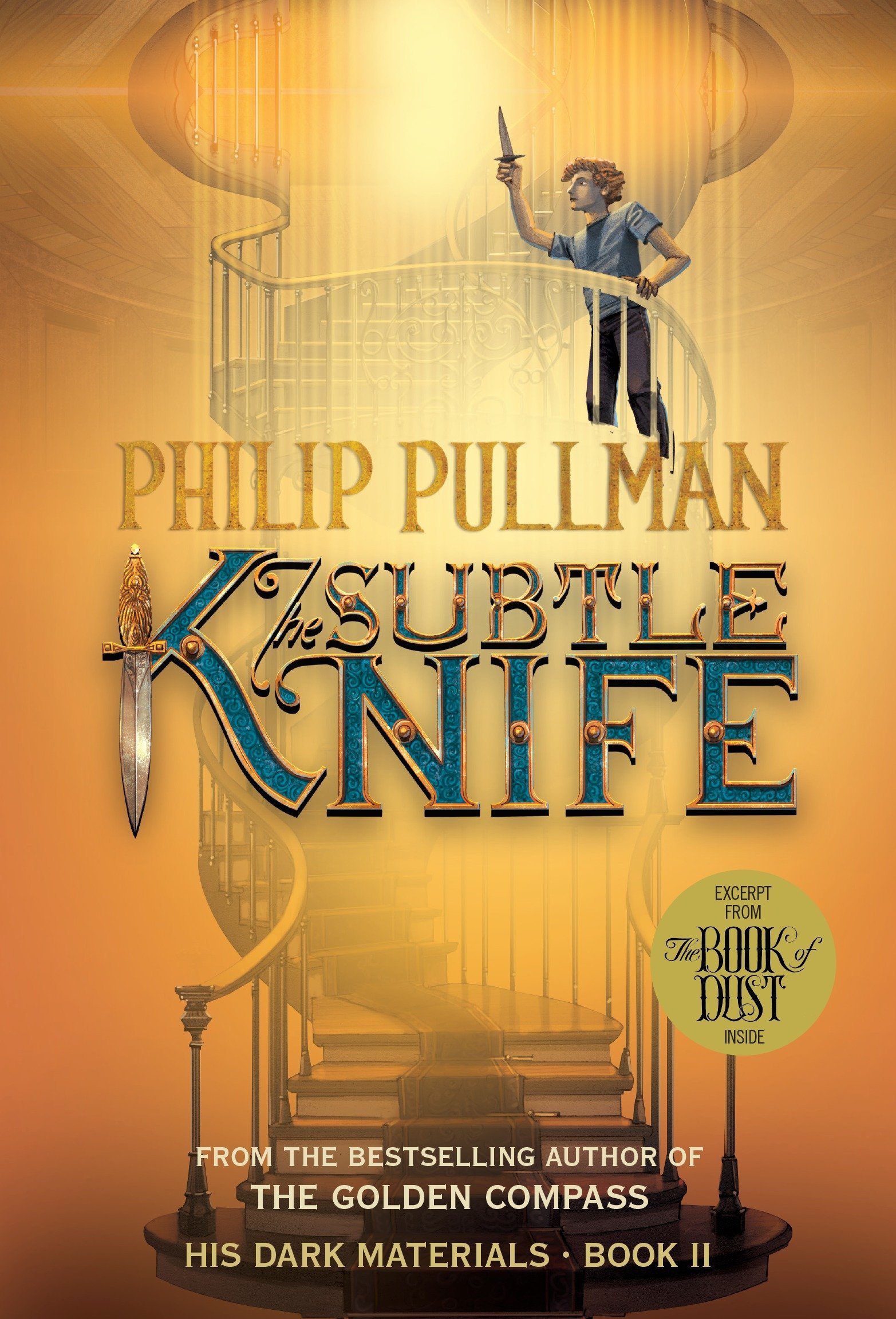
In the second book of Philip Pullman's His Dark Materials trilogy, Lyra and her new friend Will learn how to open windows into different worlds. They discover truths that will change their lives and the universe.