Vocabulary.com Blog
Articles from 2008
Blog Excerpts
VT Bee @ OUP
Today's question for Mailbag Friday comes from our own puzzlemaster, Brendan Emmett Quigley, who's been watching a lot of football. "What gives with all these sportscasters saying 'Team A out-physicaled Team B'? Physical, last time I checked, is an adjective and not a verb, right?"
Brendan's question reminds me of a saying attributed to the great philosopher Calvin (the one from "Calvin and Hobbes," of course): "Verbing weirds language." Continue reading... Our old friend Orin Hargraves, who contributes our monthly Language Lounge feature, has a new book out called Slang Rules!: A Practical Guide for English Learners. We recently caught up with Orin to hear about how his book, a companion to Merriam-Webster's Advanced Learner's English Dictionary, illuminates the richness of American slang for a global audience of language learners.
Continue reading...
Our old friend Orin Hargraves, who contributes our monthly Language Lounge feature, has a new book out called Slang Rules!: A Practical Guide for English Learners. We recently caught up with Orin to hear about how his book, a companion to Merriam-Webster's Advanced Learner's English Dictionary, illuminates the richness of American slang for a global audience of language learners.
Continue reading...
It's time once again for Mailbag Friday! Marc T. of New York, NY writes: "John McCain recently said that he put his campaign on hold to work on the Senate bailout package because 'it's not my style to simply phone it in.' Why do we talk about doing something in a lackluster or perfunctory way as phoning it in? Who originally did the phoning in, anyway?"
The history of American slang is often illuminating, and this is no exception: tracing the origins of this expression tells an intriguing story about the intersection of the technological and the theatrical. Continue reading...Behind the DictionaryLexicographers Talk About Language
Noah Webster at 250: A Visionary or a Crackpot?
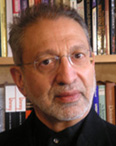 On the occasion of Noah Webster's 250th birthday, Dennis Baron assesses the legacy of the groundbreaking American lexicographer. Baron is professor of English and linguistics at the University of Illinois and writes regularly on linguistic issues at The Web of Language.
Continue reading...
On the occasion of Noah Webster's 250th birthday, Dennis Baron assesses the legacy of the groundbreaking American lexicographer. Baron is professor of English and linguistics at the University of Illinois and writes regularly on linguistic issues at The Web of Language.
Continue reading...
Blog Excerpts
Debatable Words
On Word Face-Off you can look at different word-based analyses of the second presidential debate between McCain and Obama.
Sign up now (it’s free!)
Whether you’re a teacher or a learner,
Vocabulary.com can put you or your class
on the path to systematic vocabulary improvement.