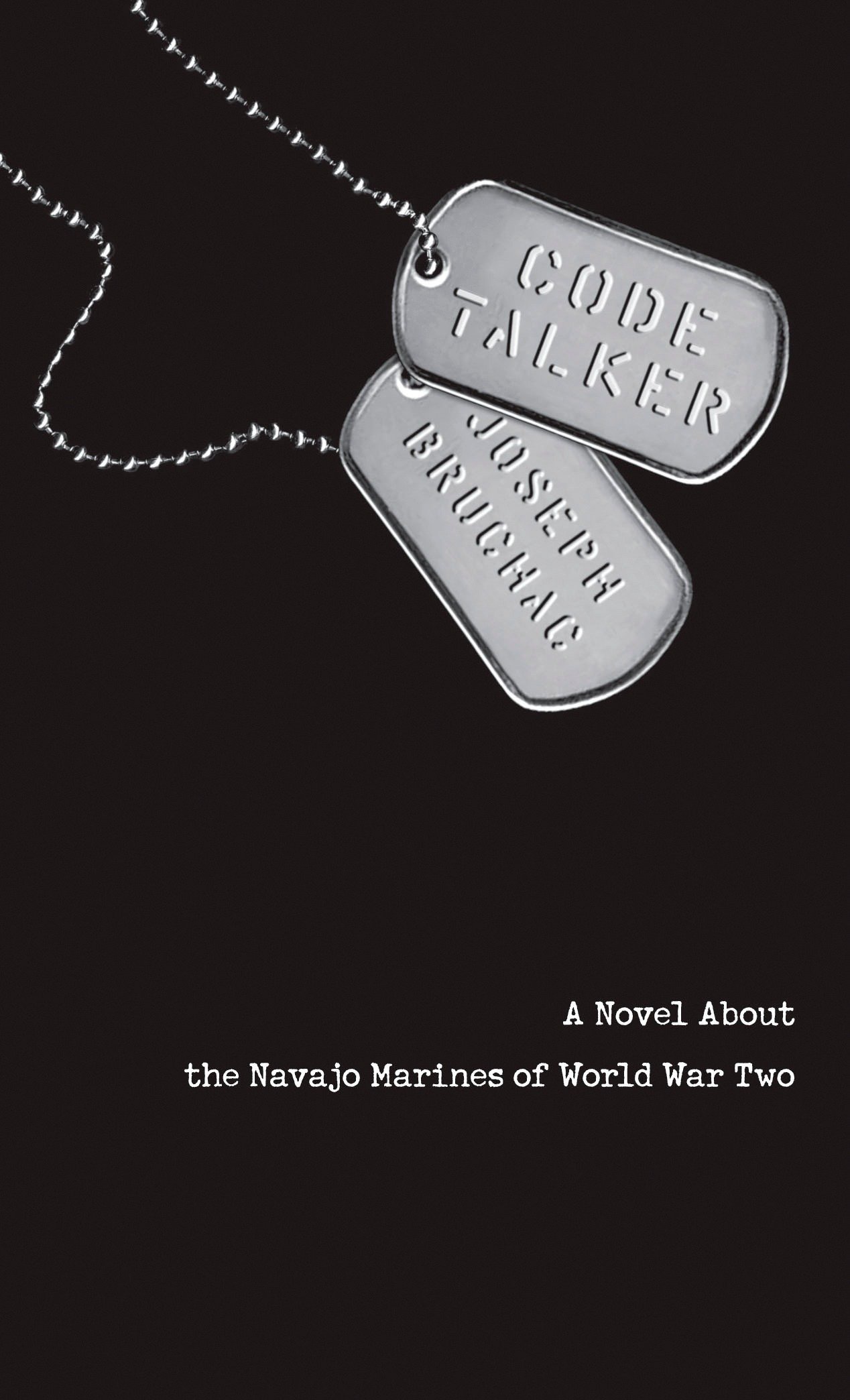
Code Talker: Chapters 18–23
Based on the true story of Navajo code talkers, this novel recounts the exploits of Ned Begay, a sixteen-year-old Navajo soldier in World War II. Ned's language skills prove to be invaluable as the Americans work to send secret messages to help them in their fight.
Here are links to our lists for book: Chapters 1–5, Chapters 6–12, Chapters 13–17, Chapters 18–23, Chapters 24–29
15 words
1868 learners
Learn words with Flashcards and other activities
Definition First

Other learning activities
Full list of words from this list:
-
circumstance
the set of facts that surround a situation or eventBecause of the chance of enemy infiltrators we were under orders to never, under any circumstances, leave our wet uncomfortable foxholes after dark.In contrast to a banzai attack, an infiltrator would move quietly and stealthily across enemy lines, "crawl into a foxhole with a knife, cut someone’s throat, and crawl out again." Thus, after dark, "anyone seen out of a foxhole would be assumed to be an enemy and could be fired upon." There would not be any time for a friendly to explain the circumstances for him being out of his foxhole.
-
shrapnel
shell containing lead pellets that explodes in flightTwo Marines had just been wounded in their arms and legs by shrapnel when they tried to retrieve a seemingly discarded .35 caliber Japanese machine pistol.
-
bivouac
temporary living quarters specially built by the army for soldiersTo all units: Japanese are booby-trapping personnel equipment, installations, and bivouacs.Unlike barracks, which are more permanent living quarters for military personnel stationed at a base or fort, a bivouac is temporary shelter for soldiers out in the field. Because a bivouac is often just a tent, it is an easy target for booby traps (hidden explosive mines).
-
battalion
an army unit consisting of a headquarters and companiesThe construction battalions, the Seabees, were working hard. In no time at all they'd put up piers, a mess hall, warehouses, and a hospital where there'd been nothing but jungle a few days before.The name Seabees comes from the initials of "Construction Battalion" but it is also fitting because they are hard workers who are part of a volunteer branch of the U.S. Navy. Although the Seabees belong to a battalion, their duties are focused on building. This emphasizes that being in combat does not always mean being in a battle. Outside of the military, a battalion can simply be a "large indefinite number."
-
phony
fraudulent; having a misleading appearanceThey’d gotten so many phony messages sent by Japanese soldiers who spoke perfect English that they thought it was just an enemy trick.
-
unanimous
in complete agreementWhen Marine Corps headquarters asked for recommendations from their generals in the field about the code talker program, the responses were unanimous.
-
propaganda
information that is spread to promote some causeThe Japanese government propaganda frightened those poor people so much that they didn’t allow themselves to be captured.
-
garrison
the troops who maintain and guard a fortified placeThe entire Japanese garrison on Saipan of 20,000 men was wiped out.
-
pulverize
destroy completelyBy the time Admiral Conolly was done, the Japanese beach defenses were pulverized.
-
procedure
a particular course of action intended to achieve a resultHe straightened his friend’s body, placed the other dog tag in Charlie’s mouth, and tied his mouth shut with a strip of cloth. That was standard procedure to make sure a dead man’s identification would not get lost.
-
evacuate
move out of an unsafe location into safetyCharlie had been evacuated to the hospital ship.Usually, an evacuation does not involve just one wounded soldier but a whole group of people. People can be evacuated out of an unsafe location, or they can be evacuated out of their homes or country because the space is needed for other reasons (the Latin "vacuus" means "empty"). Bulbs or bottles can also be evacuated to create a vacuum, or a body can be evacuated of its wastes.
-
scalpel
a thin straight surgical knifeWhen I woke up there was a bright light in my eyes and somebody was digging into my shoulder with a scalpel.
-
morale
the feeling that makes group members want to succeedOur commanders wanted to maintain morale back home and did not want to frighten the civilians.
-
martyr
one who voluntarily suffers deathHowever, the Japanese propaganda machine made him into a martyr.This word comes from Sanskrit and Latin roots that connect to memory. Thus, to be a martyr, a person must not only voluntarily submit to death, but he or she must also dedicate his or her death to a larger cause and thus be remembered as glorious ("having high honor").
-
humane
marked by concern with the alleviation of sufferingThose rules said that prisoners of war, enemy soldiers who had surrendered or been captured, had to be fed and housed in a humane way.In contrast, the narrator learned that because the Japanese saw captives as cowards, their "prisoner-of-war camps were terrible places. Captured American and British and Australian soldiers were forced into slave labor, starved, and beaten. Some were even used for medical experiments. Nearly half of the Allied soldiers who were captured by the Japanese during the war died in those camps."
Created on Wed Dec 09 14:30:01 EST 2015
(updated Tue Jun 17 17:27:08 EDT 2025)
Sign up now (it’s free!)
Whether you’re a teacher or a learner,
Vocabulary.com can put you or your class
on the path to systematic vocabulary improvement.