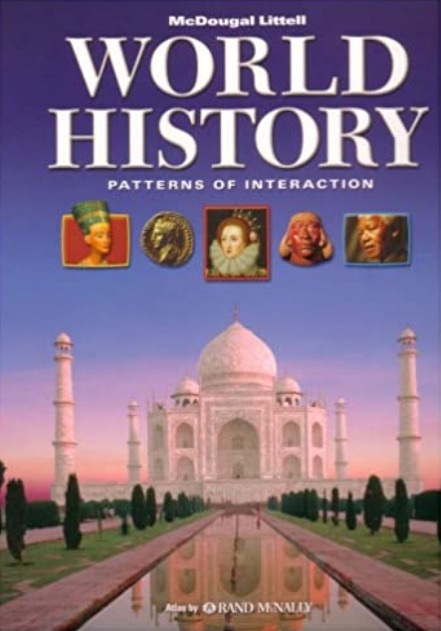
World History: Patterns of Interaction: Chapters 24–25
25 words
338 learners
Learn words with Flashcards and other activities
Definition First

Other learning activities
Full list of words from this list:
-
conservative
a person who is reluctant to accept changes and new ideasConservative: usually wealthy property owners and nobility. They argued for protecting the traditional monarchies of Europe.
-
liberal
a person who favors a philosophy of progress and reformLiberal: mostly middle-class business leaders and merchants. They wanted to give more power to elected parliaments, but only the educated and the landowners would vote.
-
radical
a person who has revolutionary ideas or opinionsRadical: favored drastic change to extend democracy to all people. They believed that governments should practice the ideals of the French Revolution—liberty, equality, and brotherhood.
-
nationalism
the doctrine that your country's interests are superiorNationalism is the belief that people’s greatest loyalty should not be to a king or an empire but to a nation of people who share a common culture and history.
-
realpolitik
politics based on practical rather than moral considerationsBismarck was a master of what came to be known as realpolitik. This German term means “the politics of reality.” The term is used to describe tough power politics with no room for idealism.
-
kaiser
an emperor, especially a ruler of Germany from 1871 to 1918On January 18, 1871, at the captured French palace of Versailles, King Wilhelm I of Prussia was crowned kaiser, or emperor.
-
Romanticism
a movement in literature and art during the late 18th and early 19th centuries that celebrated nature rather than civilizationAt the end of the 18th century, the Enlightenment idea of reason gradually gave way to another major movement in art and ideas: romanticism. This movement reflected deep interest both in nature and in the thoughts and feelings of the individual.
-
realism
artistic movement that represents the world accuratelyIn literature and the visual arts, realism tried to show life as it was, not as it should be.
-
impressionism
a school of late 19th-century French paintersBeginning in the 1860s, a group of painters in Paris reacted against the realist style. Instead of showing life “as it really was,” they tried to show their impression of a subject or a moment in time. For this reason, their style of art came to be known as impressionism.
-
industrial
of or relating to commercial enterpriseThe Industrial Revolution refers to the greatly increased output of machine-made goods that began in England in the middle 1700s.
-
enclosure
a structure consisting of an area that has been confinedWithin these larger fields, called enclosures, landowners experimented with more productive seeding and harvesting methods to boost crop yields.
-
industrialization
the development of commercial enterpriseIndustrialization, which is the process of developing machine production of goods, required such resources.
-
factory
a plant with facilities for manufacturingWealthy textile merchants set up the machines in large buildings called factories.
-
entrepreneur
someone who organizes a business ventureBoulton was an entrepreneur, a person who organizes, manages, and takes on the risks of a business.
-
urbanization
the social process whereby cities growThis period was one of urbanization—city building and the movement of people to cities.
-
middle class
a socioeconomic group that is neither wealthy nor poorMost of this new money belonged to factory owners, shippers, and merchants. These people were part of a growing middle class, a social class made up of skilled workers, professionals, businesspeople, and wealthy farmers.
-
stock
a certificate documenting a shareholder's ownershipTo raise the money, entrepreneurs sold shares of stock, or certain rights of ownership.
-
corporation
a business firm recognized by law as a single bodyA corporation is a business owned by stockholders who share in its profits but are not personally responsible for its debts.
-
laissez faire
a doctrine that government should not interfere in commerceThe term laissez faire refers to the economic policy of letting owners of industry and business set working conditions without interference. This policy favors a free market unregulated by the government. The term is French for “let do,” and by extension, “let people do as they please.”
-
capitalism
an economic system based on private ownership of assetsCapitalism is an economic system in which the factors of
production are privately owned and money is invested in business ventures to make a profit. -
utilitarianism
the doctrine that the useful is the goodIn the late 1700s, Bentham introduced the philosophy of utilitarianism....According to Bentham’s theory, people should judge ideas, institutions, and actions on the basis of their utility, or usefulness.
-
socialism
an economic system based on state ownership of capitalIn socialism, the factors of production are owned by the public and operate for the welfare of all.
-
communism
a form of socialism that abolishes private ownershipMarx described communism as a form of complete socialism in which the means of production—all land, mines, factories, railroads, and businesses—would be owned by the people.
-
union
an employee organization that bargains with an employerTo press for reforms, workers joined together in voluntary
labor associations called unions. Unions engaged in collective bargaining, negotiations between workers and their employers. -
strike
stop work in order to press demandsThey bargained for better working conditions and higher pay. If factory owners refused these demands, union members could strike, or refuse to work.
Created on Fri Aug 27 07:43:52 EDT 2021
(updated Mon Sep 27 09:32:48 EDT 2021)
Sign up now (it’s free!)
Whether you’re a teacher or a learner,
Vocabulary.com can put you or your class
on the path to systematic vocabulary improvement.