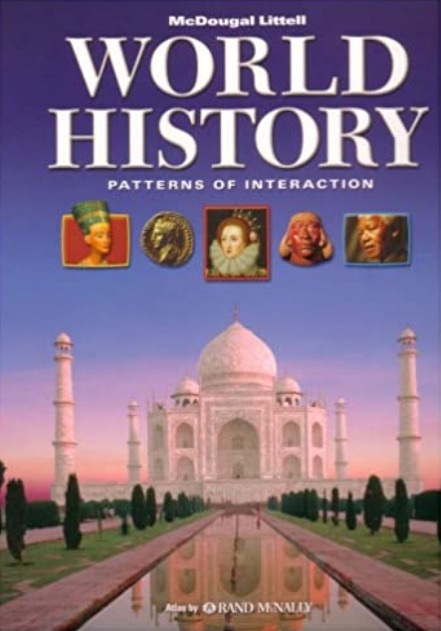
World History: Patterns of Interaction: Chapters 17–19
14 words
197 learners
Learn words with Flashcards and other activities
Definition First

Other learning activities
Full list of words from this list:
-
renaissance
a period of renewed activity and prominenceThis movement that started in Italy caused an explosion of creativity in art, writing, and thought that lasted approximately from 1300 to 1600. Historians call this period the Renaissance. The term means rebirth, and in this context, it refers to a revival of art and learning.
-
humanism
Renaissance movement focused on classical studiesThe study of classical texts led to humanism, an intellectual movement that focused on human potential and achievements.
-
secular
characteristic of this world rather than the spiritual worldMost people remained devout Catholics. However, the basic spirit of Renaissance society was secular—worldly rather than spiritual and concerned with the here and now.
-
patron
someone who supports or champions somethingChurch leaders during the Renaissance beautified Rome and
other cities by spending huge amounts of money for art. They became patrons of the arts by financially supporting artists. Renaissance merchants and wealthy families also were patrons of the arts. -
perspective
appearance as determined by distance from the viewerRenaissance painters used the technique of perspective, which shows three dimensions on a flat surface.
-
vernacular
the everyday speech of the peopleSome followed the example of the medieval writer Dante. He wrote in the vernacular, his native language, instead of Latin. Dante’s native language was Italian.
-
utopia
ideally perfect stateThomas More tried to show a better model of society. In 1516, he wrote the book Utopia. In Greek, utopia means “no place.” In English it has come to mean an ideal place as depicted in More’s book.
-
reformation
improvement in the condition of institutions or practicesQuickly, Luther’s name became known all over Germany. His actions began the Reformation, a movement for religious reform.
-
annul
cancel officiallyChurch law did not allow divorce. However, the pope could annul, or set aside, Henry’s marriage if proof could be found that it had never been legal in the first place.
-
predestination
the doctrine that God has foreordained every eventHe believed that God has known since the beginning of time who will be saved. This doctrine is called predestination.
-
theocracy
a political unit governed by a deityCalvin believed that the ideal government was a theocracy, a government controlled by religious leaders.
-
sultan
the ruler of a Muslim countryThe second Ottoman leader, Orkhan I, was Osman’s son. He felt strong enough to declare himself sultan, meaning “overlord” or “one with power.”
-
janissary
elite Turkish soldier who was a member of the Sultan’s guardAn elite force of 30,000 soldiers known as janissaries was trained to be loyal to the sultan only.
-
haiku
an epigrammatic Japanese verse form of three short linesThe people also read haiku, 5-7-5-syllable, 3-line verse poetry. This poetry presents images rather than ideas.
Created on Thu Aug 26 16:33:17 EDT 2021
(updated Fri Sep 10 13:26:15 EDT 2021)
Sign up now (it’s free!)
Whether you’re a teacher or a learner,
Vocabulary.com can put you or your class
on the path to systematic vocabulary improvement.