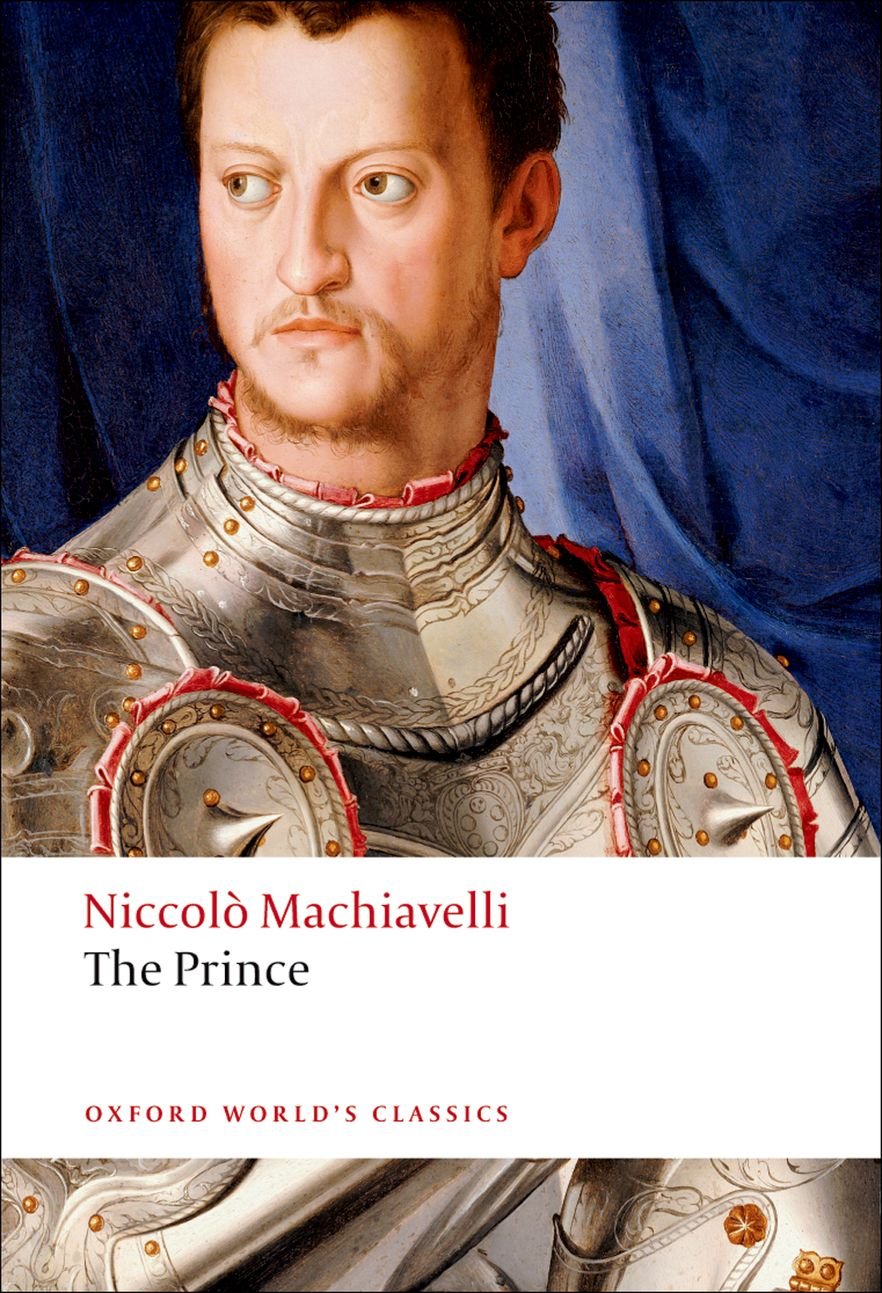
The Prince: Chapters 15–19
In this classic treatise, Machiavelli outlines the traits and strategies of an effective ruler. Learn these words from the translation by Peter Bondanella.
Here are links to our lists for the book: Chapters 1–5, Chapters 6–7, Chapters 8–14, Chapters 15–19, Chapters 20–26
15 words
95 learners
Learn words with Flashcards and other activities
Definition First

Other learning activities
Full list of words from this list:
-
lascivious
driven by lustOne is considered a giver, the other rapacious; one cruel, the other merciful; one a breaker of faith, the other faithful; one effeminate and cowardly, the other fierce and courageous; one humane, the other proud; one lascivious, the other chaste; one trustworthy, the other shrewd; one hard, the other easygoing; one serious, the other frivolous; one religious, the other unbelieving; and the like.
-
infamy
evil fame or public reputationMoreover, he need not worry about incurring the infamy of those vices without which it would be difficult to save the state.
-
sumptuous
rich and superior in qualityAnd so, if a prince wants to maintain his reputation for generosity among men, it is necessary for him not to neglect any possible means of sumptuous display; in so doing, such a prince will always use up all his resources in such displays, and will eventually be obliged, if he wishes to maintain his reputation for generosity, to burden the people with excessive taxes and to do all those things one does to procure money.
-
parsimony
extreme care in spending moneyWith time he will come to be considered more generous, once it is evident that, as a result of his parsimony, his income is sufficient, he can defend himself from anyone who wages war against him, and he can undertake enterprises without overburdening his people.
-
manifest
clearly revealed to the mind or the senses or judgmentIf he must spill someone’s blood, he should do this when there is proper justification and manifest cause.
-
patrimony
an inheritance coming by right of birthBut above all else, he should abstain from seizing the property of others; for men forget the death of their father more quickly than the loss of their patrimony.
-
dissension
disagreement among those expected to cooperateNumbered among the remarkable deeds of Hannibal is this: that while he had a very large army made up of all kinds of men that he commanded in foreign lands, there never arose the slightest dissension, either among themselves or against their leader, both during his periods of good and bad luck.
-
censure
rebuke formallyThis came about from nothing other than his excessive compassion, which gave his soldiers more licence than is suitable to military discipline. For this he was censured in the Senate by Fabius Maximus, who called him the corruptor of the Roman army.
-
imbue
give qualities or abilities to; endowTherefore, a prince must be very careful never to let anything fall from his lips that is not imbued with the five qualities mentioned above; to those seeing and hearing him, he should appear to be all mercy, all faithfulness, all integrity, all humanity, and all religion.
-
contend
come to terms withIn most cases, so long as you do not deprive them of either their honour or their property, most men live content, and you only have to contend with the ambition of the few, who can be restrained without difficulty and by many means.
-
irresolute
uncertain how to act or proceedWhat makes him despised is being considered changeable, frivolous, effeminate, cowardly, and irresolute.
-
irrevocable
incapable of being retractedConcerning the private affairs of his subjects, he must insist that his decisions be irrevocable.
-
apprehension
fearful expectation or anticipationReducing the matter to a few brief words, let me say that on the part of the conspirator there is nothing but fear, apprehension, and the terrifying thought of punishment.
-
pretext
a fictitious reason that conceals the real reasonUnder this pretext, without showing his aspiration for imperial power, he moved his army to Rome, and was in Italy before his departure was known.
-
bestial
resembling an animal, especially by being vicious or cruelBut let us come to Commodus, who held imperial power with great ease, having inherited it by birth, being the son of Marcus. It would have been enough for him to follow in the footsteps of his father, and he would have satisfied the soldiers and the people. But having a cruel and bestial spirit, in order to practise his greed upon the people, he turned to pleasing the armies and to making them undisciplined.
Created on Mon Oct 05 17:38:30 EDT 2020
(updated Mon Jul 07 10:23:10 EDT 2025)
Sign up now (it’s free!)
Whether you’re a teacher or a learner,
Vocabulary.com can put you or your class
on the path to systematic vocabulary improvement.