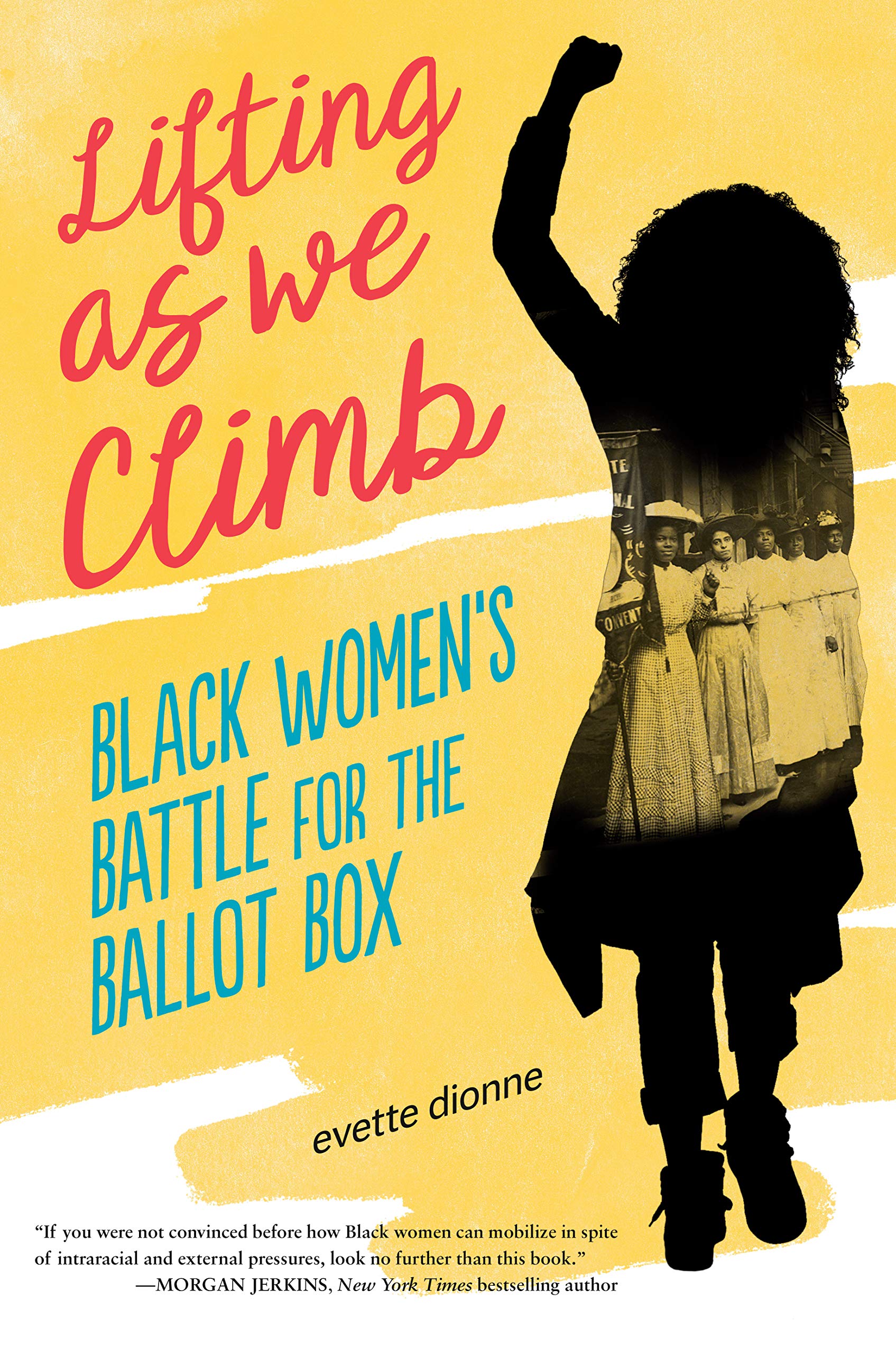
Lifting as We Climb: Chapter 6–Epilogue
This book explores the achievements of black women in the American suffrage movement.
Here are links to our lists for the book: Chapters 1–2, Chapters 3–5, Chapter 6–Epilogue
35 words
180 learners
Learn words with Flashcards and other activities
Definition First

Other learning activities
Full list of words from this list:
-
chasten
restrain“The hearts of Afro-American women are too warm and too large for race hatred,” she said. “Long suffering has so chastened them that they are developing a special sense of sympathy for all who suffer and fail of justice..."
-
distinction
high status importance owing to marked superiorityAll the associated interests of church, temperance, and social reform in which American women are winning distinction can be wonderfully advanced when our women shall be welcomed as co-workers, and estimated solely by what they are worth to the moral elevation of all the people.
-
eulogize
praise formally and eloquentlyFannie Barrier Williams so greatly contributed to the suffrage movement that she was the only African American chosen to eulogize Susan B. Anthony at her funeral in 1906.
-
incumbent
currently holding an officeShe put her plan in motion in 1914, when Hugh Norris, incumbent councilman for the Second Ward, came up for reelection.
-
actuate
give an incentive for doing somethingThe Alpha Suffrage Club’s successful strategy and voter registration drive grabbed the attention of local newspapers, such as the Chicago Defender, which ran a story that said, “The women’s vote was a revelation to everyone, and after analysis shows them still actuated by the sense of duty to do more.”
-
complacency
the feeling you have when you are satisfied with yourselfAfter participating in such intense and extreme activism, Paul thought the NAWSA’s passive approach was inadequate and ineffective, and had to be changed. When Paul and Burns returned from London to the United States in January 1910, they wanted to shake the NAWSA out of complacency and make a push for a federal suffrage amendment.
-
dub
give a nickname toSome suffragists, like the sixteen women dubbed the “suffrage pilgrims,” decided to walk from New York to Washington—a journey that took more than twenty-four hours.
-
pilgrim
someone who journeys to a sacred place as an act of devotionSome suffragists, like the sixteen women dubbed the “suffrage pilgrims,” decided to walk from New York to Washington—a journey that took more than twenty-four hours.
-
astride
with one leg on each sideBut finally the parade started, led off by activist lawyer Inez Milholland boldly astride a white horse.
-
canvass
solicit votes from potential voters in an electoral campaignShe and the Alpha Suffrage Club picked up where they’d left off, canvassing communities, registering voters, and educating the Second Ward and other predominantly Black communities about the voting process.
-
militant
disposed to warfare or hard-line policiesShe left the NAWSA in 1916 because some of the organization’s members believed her tactics were too radical, militant, and “unladylike.”
-
sentinel
a person employed to keep watch for some anticipated eventPaul organized the “Silent Sentinels,” a group of women, dressed in purple and wearing gold and white sashes, who stood outside of the White House six days a week from January 1917 to June 1919 with protest signs that read “Mr. President—What Will You Do for Woman Suffrage?” and asked how long they’d have to wait before they’d get the right to vote.
-
surmount
get on top of; deal with successfullyMary Church Terrell often joined them, noting that as a Black woman, she was a part of the “only group in this country that has two such huge obstacles to surmount—sex and race.”
-
culminate
end, especially to reach a final or climactic stageThe NAWSA’s racism toward Black woman suffragists continued throughout the 1900s, culminating with new president Carrie Chapman Catt refusing to allow the Northeastern Federation of Women’s Clubs, an organization for and about Black women, to become a part of the NAWSA in 1919.
-
initiate
set in motion, start an event or prepare the way forSuffragists jailed in the workhouse were treated poorly and only fed bread and water. When Paul tried to initiate a hunger strike, she was force-fed.
-
stalwart
possessing or displaying courageThe earliest and most stalwart of suffragists did not live to see this happen. Black woman suffragists who’d fought to gain the right to vote died before they could ever cast a ballot.
-
vigil
a purposeful surveillance to guard or observeAfter teaching her night class and sending many of her students home, she, her groundskeeper, and some students whom she asked to remain behind stood vigil outside of the school and looked out for KKK members.
-
influx
the process of flowing inStaring down the KKK and following through with the march to vote turned Bethune into a local celebrity, which brought an influx of money and other resources to the school.
-
affluent
having an abundant supply of money or possessions of valueRoosevelt came from an affluent New York family and community. He couldn’t fully grasp the impact of the Great Depression on Black Americans.
-
repercussion
a remote or indirect consequence of some actionBut she still faced repercussions for even trying. When the person who owned the sharecropping land that Hamer’s family lived and worked on learned that she’d tried to register to vote, he told Hamer, “You’ll have to go down and withdraw your registration, or you’ll have to leave this place.”
-
seminal
influential and providing a basis for later developmentShe was also a founding member of SNCC, and helped the organization orchestrate its Freedom Summer, or Mississippi Summer Project, a seminal three-month registration drive that began in June 1964.
-
egregious
conspicuously and outrageously bad or reprehensibleOver the course of ten weeks of Freedom Summer, more than one thousand people were arrested and thirty homes that belonged to African Americans were bombed or burned to the ground. And most egregiously, three volunteers—James Chaney, Andrew Goodman, and Michael Schwerner—were kidnapped and murdered by members of the Ku Klux Klan.
-
vie
compete for somethingSo Johnson met with Senator Hubert Humphrey, who was vying for the vice presidential nomination, and a few others, and created a compromise: They would give the Freedom Democrats two nonvoting seats on the Mississippi delegation in exchange for their endorsement.
-
convocation
a group gathered in response to a summons“For the cries of pain and the hymns and protests of oppressed people have summoned into convocation all the majesty of this great Government—the Government of the greatest Nation on earth. Our mission is at once the oldest and the most basic of this country: to right wrong, to do justice, to serve man.”
-
bate
moderate or restrain; lessen the force ofAfter the successful march, Ella Baker, Fannie Lou Hamer, and the other Black women who were fighting for voting rights waited with bated breath to learn the fate of the Voting Rights Act.
-
compliance
acting according to certain accepted standardsThat could not have happened without the passage of the Voting Rights Act. The VRA was reauthorized in 1970 for five years, in 1975 for seven years, and in 1982 for twenty-five years. In 2006, the formula to determine whether or not counties or cities were in compliance with the VRA was extended again for twenty-five years.
-
deluge
an overwhelming number or amountHowever, after the 2010 midterm elections led to a number of state legislatures and governors flipping from Democratic to Republican control, a deluge of laws were passed to restrict voting in multiple states.
-
provision
a stipulated conditionWhen President Lyndon B. Johnson signed the Voting Rights Act into law in 1965, it included Sections 4 and 5, provisions that required cities, counties, and states with a history of racially discriminating against voters to get “preclearance” from either the United States Attorney General or a panel of judges in the United States District Court for the District of Columbia before they could make changes to their voting laws.
-
abridge
lessen, diminish, or curtailCities and counties governed by Sections 4 and 5 had to prove that their suggested rule or law change wouldn’t “deny or abridge the right to vote on account of race, color, or membership in a language minority group” before it could be enacted.
-
disparity
inequality or difference in some respectThe Voting Rights Act of 1965 came to a screeching halt on June 25, 2013, when the US Supreme Court struck down Section 4 as unconstitutional because it was based on “decades-old data and eradicated practices” that were unfair to states, cities, and counties—like Shelby County, Alabama, the one that brought the case to the Supreme Court—where “there is no longer such a disparity” between registered white and Black voters.
-
dissent
the difference of one judge's opinion from the majorityOther Supreme Court justices, such as Ruth Bader Ginsburg, disagreed with the ruling. She wrote in her dissent that “throwing out preclearance when it has worked and is continuing to work is like throwing away your umbrella in a rainstorm because you are not getting wet.”
-
nix
command againstThese states and others also began purging registered voters from their rolls, nixing same-day voter registration, closing polling places in predominantly Black communities, and employing a number of tactics to prevent Black voters and other voters of color from being able to exercise their rights.
-
profoundly
to a great depth psychologicallySo, more than 171 years after the Seneca Falls Convention, Black people “continue to suffer significant, and profoundly unequal, limitations on their ability to vote.”
-
mired
entangled or hinderedIf she’d won, she would’ve been America’s first Black woman governor, but instead, the historic election was mired in controversy about voting rights.
-
hallmark
a distinctive characteristic or attributeVoting is a hallmark of being an American citizen, and preserving the right to vote still matters—forever and always.
Created on Mon Oct 05 11:50:29 EDT 2020
(updated Wed Oct 07 08:31:09 EDT 2020)
Sign up now (it’s free!)
Whether you’re a teacher or a learner,
Vocabulary.com can put you or your class
on the path to systematic vocabulary improvement.