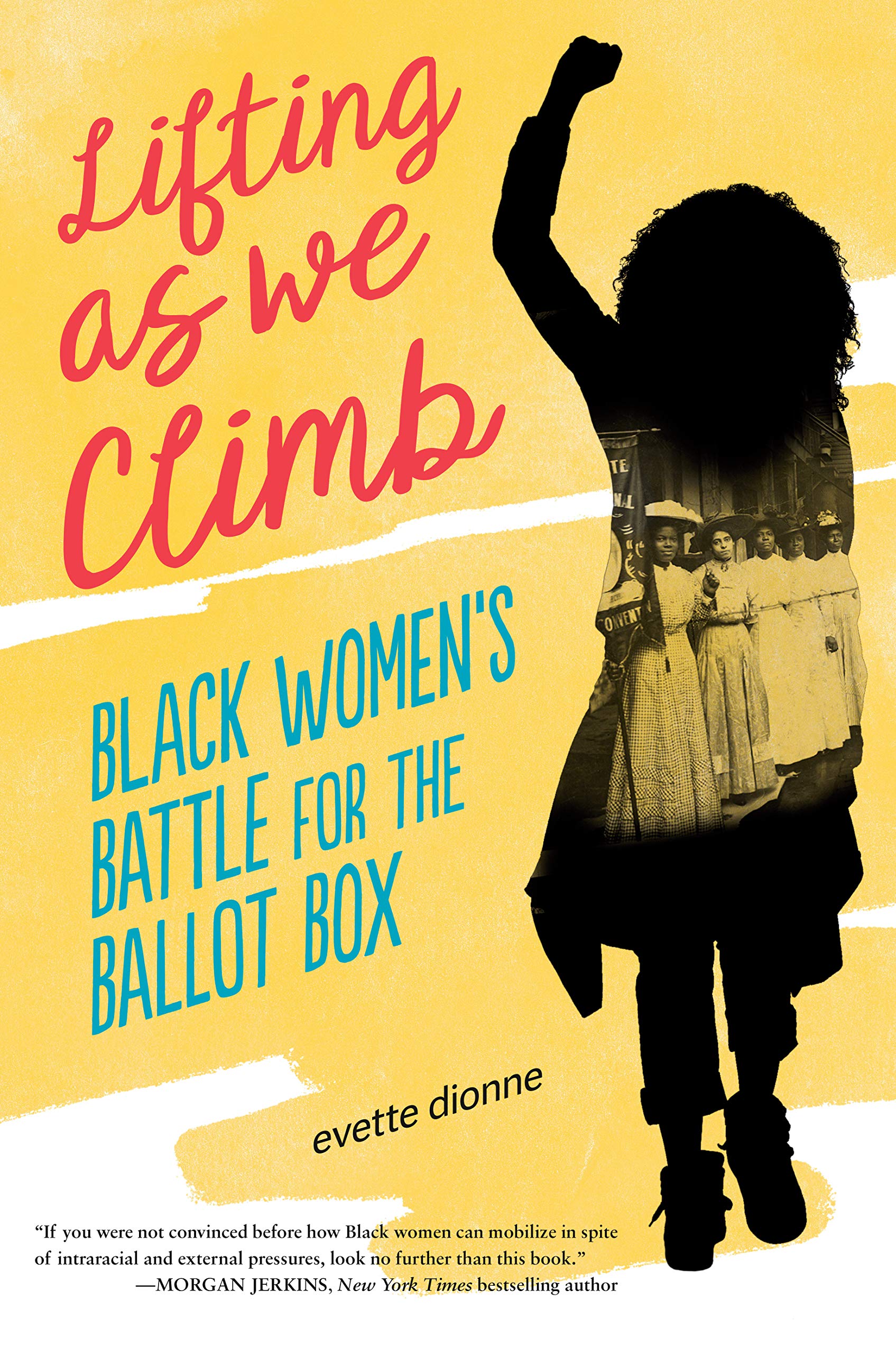
Lifting as We Climb: Chapters 3–5
This book explores the achievements of black women in the American suffrage movement.
Here are links to our lists for the book: Chapters 1–2, Chapters 3–5, Chapter 6–Epilogue
40 words
208 learners
Learn words with Flashcards and other activities
Definition First

Other learning activities
Full list of words from this list:
-
equitable
fair to all parties as dictated by reason and conscienceIn the years after the Civil War ended, as part of a larger effort to make life more equitable for Black people who’d been newly freed, there were three pieces of legislation passed, including one that provided Black men with the right to vote.
-
caveat
a warning against certain actsThe Thirteenth Amendment officially outlawed slavery in the United States, though it included the caveat that slavery and involuntary servitude could be a punishment for a crime.
-
prolific
intellectually productiveEducator, activist, and suffragist Anna Julia Cooper, who later became a prolific writer, was in the middle.
-
stifle
smother or suppressCooper was ambitious and bright, and felt stifled at Saint Augustine’s. Female students were funneled into the “ladies’ course,” which prevented women from taking the higher-level classes that prepared male students to either become ministers or attend good four-year colleges.
-
imbue
fill or soak totallyShe moved to Washington, DC, to teach math and science at the M Street High School, where she was committed to imbuing the Black students with her own high level of confidence.
-
relent
give in, as to influence or pressureShe relented and reluctantly supported the NAWSA’s Southern strategy.
-
proxy
a person authorized to act for anotherAfter Gordon convinced Louisiana’s Constitutional Convention to include the clause, “All taxpaying women shall have the right to vote in person or by proxy on all questions of taxation,” the NAWSA allowed her to travel through Southern states on their behalf, encouraging other educated white women to join the movement.
-
melee
a noisy riotous fightHe took it personally when a group of Black and white children got into a fight after they’d played a game of marbles near Moss’s grocery. Both Moss and Barrett tried to stop the fight; Barrett got clubbed in the head during the melee.
-
indignation
a feeling of righteous anger...all authority given into the hands of the mob, and innocent men cut down as if they were brutes—the first feeling was one of utter dismay, then intense indignation.
-
galvanize
stimulate to actionThese brutal murders galvanized Wells-Barnett. She was shaken, but also energized to raise awareness about how Black families throughout the South were being terrorized by lynching.
-
lynch
kill without legal sanctionThese brutal murders galvanized Wells-Barnett. She was shaken, but also energized to raise awareness about how Black families throughout the South were being terrorized by lynching.
-
temperance
the act of abstaining, especially from drinking alcoholWells-Barnett got a lot of pushback, especially from Frances Willard, the president of the Women’s Christian Temperance Union. The WCTU was an influential reform organization that wanted to create a “sober and pure world” by banning the legal sale of alcohol, which was seen as the source of many social problems, especially ones that impacted women and children.
-
imputation
a statement attributing something dishonestWillard claimed that Wells-Barnett was hurting her own cause by alienating white suffragists. She claimed that Wells-Barnett had “put an imputation upon half the white race in this country that [was] unjust, and saving the rarest exceptional instances, wholly without foundation.”
-
relinquish
part with a possession or rightMary Church Terrell was not relinquishing her membership in the National American Woman Suffrage Association, even when she felt unwelcomed.
-
instill
teach and impress by frequent repetitions or admonitionsMary Church Terrell (1863–1954) was born in Memphis, Tennessee, on September 23, 1863, to former slaves who instilled in her the value of education and activism.
-
punitive
inflicting punishmentIt didn’t matter to McLendon that most Black men in Georgia and throughout the South couldn’t register to vote because state governments had begun passing punitive laws that made it more difficult for them to exercise their voting rights.
-
tabulate
arrange or enter in rows and columnsIn 1895, Wells-Barnett published The Red Record: Tabulated Statistics and Alleged Causes of Lynching in the United States.
-
condemnation
an expression of strong disapprovalTerrell and Frederick Douglass’s appeals to President Benjamin Harrison to produce a public condemnation of lynching failed.
-
dustup
an angry disputeAfter the dustup between Frances Willard and Ida B. Wells-Barnett, Ruffin invited Wells-Barnett to speak at the Woman’s Era Club; she also published stories about Willard’s perspective on lynching.
-
politic
marked by artful prudence, expedience, and shrewdnessRuffin wrote that Willard was “obliged to be politic, and for the Welfare of the WCTU not to antagonize any section of this country” because she was the “head of a tremendous organization.”
-
apologist
a person who argues to defend some policy or institutionIn an 1895 article titled “Apologists for Lynching,” Ruffin challenged Willard, making suffrage impossible to separate from the practice of lynching.
-
condone
excuse, overlook, or make allowances for“It is inconceivable that the WCTU will ever condone lynching, no matter what the provocation, and no matter whether its barbarous spectacle is to be seen in the North or South, in home or foreign countries,” she said, which seemingly signaled that she’d gotten the message from Wells-Barnett and Ruffin.
-
devoid
completely wanting or lackingThe Missouri journalist claimed that Black women had “no sense of virtue” and were “altogether without character.” He also declared that the “Negroes of this country were wholly devoid of morality, the women were prostitutes and were natural thieves and liars.”
-
incendiary
inciting action or rebellionFannie Barrier Williams, another influential political activist and educator, believed that Jack’s incendiary letter had “stirred the intelligent colored woman of America as nothing else has ever done,” and that it was to their advantage to form a united coalition around the issues that mattered most to Black women.
-
rebuke
an act or expression of criticism and censureMost importantly, they were there as Black women “standing for purity and mental worth,” a powerful rebuke to James W. Jack’s idea about their immorality.
-
earnestness
the trait of being serious or sincereJosephine St. Pierre Ruffin also had a bigger agenda: She wanted to bring all the Black women’s clubs under the same umbrella, so they could share resources and “equip ourselves with knowledge, sympathy, earnestness for this work.”
-
redress
make reparations or amends forSuffrage was an important goal for Black women’s clubs as a tool to help them redress larger issues, such as abuse in the judicial system, being lynched, and not being able to get ahead financially.
-
scourge
something causing misery or deathThe majority of the group’s members were professional, middle-class women who considered poor Black people a scourge on the overall image of the Black community.
-
condescension
showing arrogance by patronizing those considered inferiorThere was no excuse for this kind of condescension, though Mary Church Terrell and those who followed her as presidents of NACWC—Josephine Silone Yates, Lucy Thurman, and Elizabeth Carter Brooks—didn’t see it that way.
-
behest
an authoritative command or requestTerrell came to the 1898 NAWSA conference to deliver a speech at the behest of Susan B. Anthony, one of her close friends whom she considered to be somewhat of a mentor.
-
fruition
the attainment or fulfillment of a plan or objective“And so, lifting as we climb, onward and upward we go, struggling and striving, and hoping that the buds and blossoms of our desires will burst into glorious fruition ere long,” she said at the end of her speech.
-
patronage
the act of providing approval and support“Seeking no favors because of our color, nor patronage because of our needs, we knock at the bar of justice, asking an equal chance.”
-
rhetoric
using language effectively to please or persuadeEven as white suffragists spewed hateful rhetoric in an effort to gain the right to vote, Black suffragists continued slowly, but surely, working on a variety of different issues that impacted their community.
-
incite
provoke or stir upIn the hospital, Jamison described his attacker as a “light-colored negro with a slight mustache.” Two local newspapers ran the description, which incited a mob of white men to attack Joe James, a drunken man who was sleeping off a hangover in the same North End neighborhood.
-
solicit
make a petition for something desiredHer school in Daytona Beach, Florida, expanded so quickly that Bethune had to ride her bike through the muggy streets of Florida, knocking on doors to solicit volunteers and donations, and holding mass bake sales to raise enough money to keep the doors open.
-
caste
social status conferred by a system based on classIts mission was to “promote equality of rights and to eradicate caste or race prejudice among the citizens of the United States; to advance the interest of colored citizens; to secure for them impartial suffrage; and to increase their opportunities for securing justice in the courts, education for the children, employment according to their ability and complete equality before law.”
-
impartial
free from undue bias or preconceived opinionsIts mission was to “promote equality of rights and to eradicate caste or race prejudice among the citizens of the United States; to advance the interest of colored citizens; to secure for them impartial suffrage; and to increase their opportunities for securing justice in the courts, education for the children, employment according to their ability and complete equality before law.”
-
ordinance
a statute enacted by a city governmentIn Du Bois’s estimation, “votes for women means votes for Black women” because having access to the ballot box would give Black women more control over “the conduct of educational systems, charitable and correctional institutions, public sanitation and municipal ordinances.”
-
protege
a person who receives support from an influential patronBy the time the NAACP formed, Anna Howard Shaw, a protégé of Susan B. Anthony, had taken over the NAWSA.
-
denounce
accuse or condemn openly as disgracefulIn August, about two months before the convention took place, writer, journalist, and suffragist Martha Gruening requested the NAWSA consider a resolution that would denounce white supremacy and asked for a “colored delegate” to bring the resolution to a vote.
Created on Mon Oct 05 11:50:08 EDT 2020
(updated Wed Oct 07 08:08:09 EDT 2020)
Sign up now (it’s free!)
Whether you’re a teacher or a learner,
Vocabulary.com can put you or your class
on the path to systematic vocabulary improvement.