Stamped: Section 4
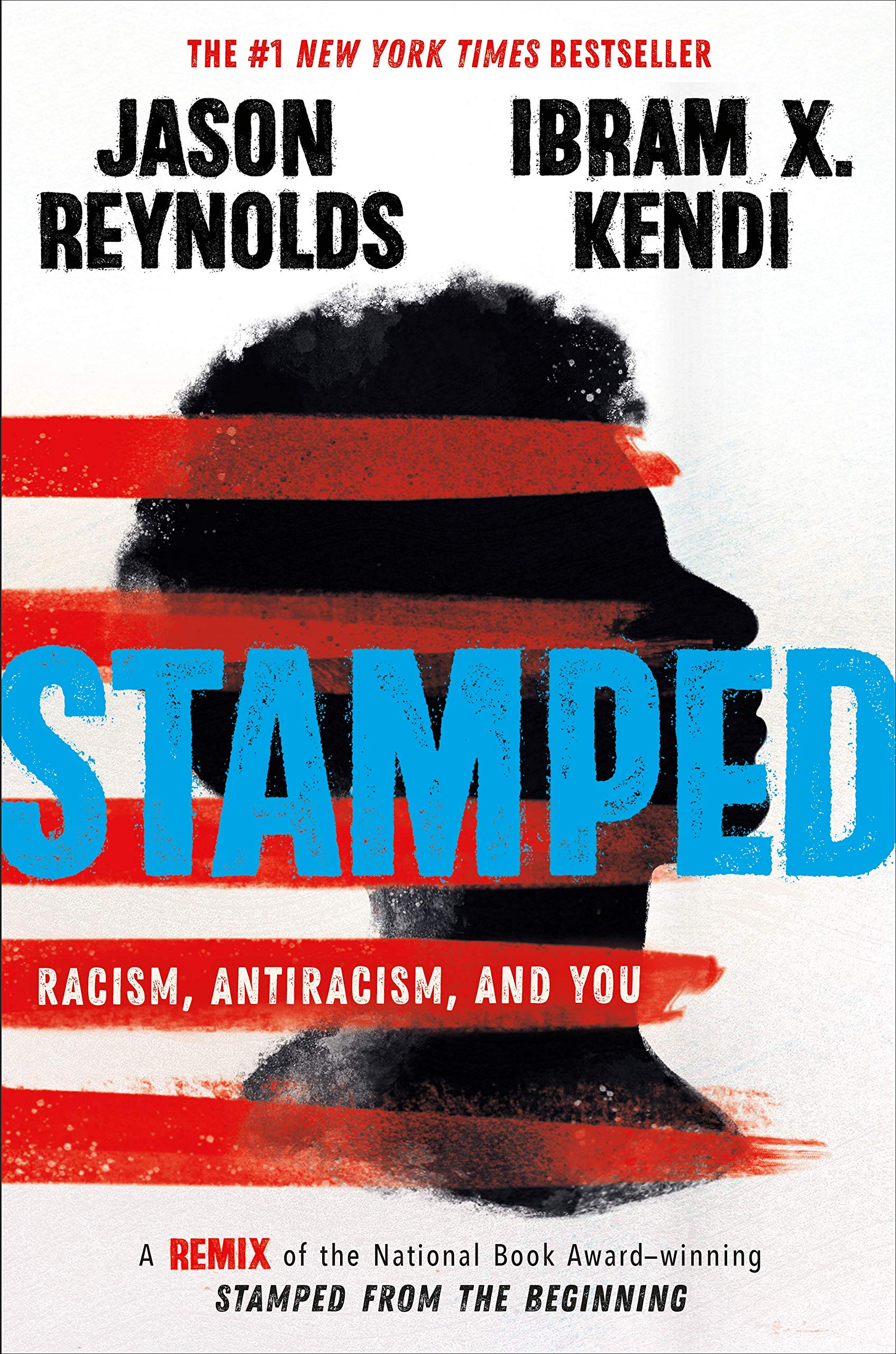
This bestselling book traces the history of racist ideas and racial injustice in the United States.
Here are links to our lists for the book: Section 1, Sections 2–3, Section 4, Section 5
40 words
751 learners
Learn words with Flashcards and other activities
Definition First

Other learning activities
Full list of words from this list:
-
irredeemable
not capable of or subject to reform or remedyJust as John Cotton and Richard Mather had planned several generations before, these ideas were coming out of Du Bois’s Ivy League classrooms, where he’d basically been fed the same narrative that Black people had been ruined by slavery. That they were irredeemable, in desperate need of fixing but unfortunately unfixable, which meant he was obviously exceptional, and...an exception.
-
malicious
having the nature of threatening evilBut the accusation of rape could make it easier for southern White men to puff up and act maliciously, all in the name of defending the honor of White women.
-
diligence
persevering determination to perform a taskWashington wrote Up from Slavery, which outlined the diligence, faith, and fortitude it took (and takes) to survive in America, coupled with the idea of the “White savior.”
-
fortitude
strength of mind that enables one to endure adversityWashington wrote Up from Slavery, which outlined the diligence, faith, and fortitude it took (and takes) to survive in America, coupled with the idea of the “White savior.”
-
epiphany
a usually sudden insight, perception, or understanding of somethingStories featuring White people having antiracist epiphanies or moments of empathy resulting in the “saving” of Black people—White savior stories—were becoming a fixture in American media, and the problem with them wasn’t that there weren’t any “good” White people in real life, it’s that the stories gave the illusion that there were more than there really were.
-
accommodating
obliging; willing to do favorsWashington was even invited to the White House once Theodore Roosevelt got into office, while the always sophisticated Du Bois publicly critiqued Washington, calling him old-fashioned for being so accommodating to White people, for presenting the idea that Black people should find dignity through work, and that no education was complete without the learning of a trade.
-
subsequent
following in time or orderIn the sequels and subsequent stories, Tarzan protects a White woman named Jane from being ravished by Africans.
-
allegation
a formal accusation against somebodyRape isn’t something to be taken lightly or to be turned back on the victim as a sharp blade of blame. But during this time, allegations of rape were often used as an excuse to lynch Black men, rooted in the stereotype of the savagery of the Black man and the preciousness of the White woman.
-
lynch
kill without legal sanctionRape isn’t something to be taken lightly or to be turned back on the victim as a sharp blade of blame. But during this time, allegations of rape were often used as an excuse to lynch Black men, rooted in the stereotype of the savagery of the Black man and the preciousness of the White woman.
-
converge
move or draw together at a certain locationAnd from this he fashioned a sample set of Black people who sat at the converging point. Black people to be “positive” representatives of the race. Like, if Blackness—“good” Blackness—was a brand, Du Bois wanted these Black people to be the ambassadors of that brand.
-
ambassador
an informal representativeAnd from this he fashioned a sample set of Black people who sat at the converging point. Black people to be “positive” representatives of the race. Like, if Blackness—“good” Blackness—was a brand, Du Bois wanted these Black people to be the ambassadors of that brand.
-
persecution
causing someone to sufferBut Du Bois would get a wake-up call. A slap in the face, even. Not from Washington, but from a man named Franz Boas, who had immigrated to America from Germany in 1886 because of anti-Jewish persecution.
-
anthropologist
a social scientist specializing in the study of humanityBoas had become one of America’s most prominent anthropologists and had been drawing similarities between the way his people were mistreated in Germany and the way Black people were being mistreated in America—with each nation justifying the treatment by saying the persecuted group was naturally inferior.
-
avatar
a new personification of a familiar idea or personFor Black people, however, sports and entertainment were, and still are, a way to step into the shoes of the big-timer. It was a way to use the athlete or the entertainer—Johnson being both—as an avatar.
-
solidarity
a union of interests or purposes among members of a groupSo Garvey decided to set up shop in Harlem and start his own organization, called the Universal Negro Improvement Association (UNIA). Its purpose was to focus on African solidarity, the beauty of dark skin and African American culture, and global African self-determination.
-
eugenics
the promotion of controlled breeding in human populationsEugenicists—people who believed you could control the “quality” of human beings by keeping undesirable genetics out, meaning the genetics of Black people—were criticizing and berating the mixing of races, because Whiteness was seen as pure.
-
berate
censure severely or angrilyEugenicists—people who believed you could control the “quality” of human beings by keeping undesirable genetics out, meaning the genetics of Black people—were criticizing and berating the mixing of races, because Whiteness was seen as pure.
-
disparity
inequality or difference in some respectHe’d tried to provide White Americans with the scientific facts of racial disparities, believing reason could kill racism, as if reason had birthed it.
-
staunch
firm and dependable especially in loyaltyLike I said, Garvey was a staunch antiracist; though Du Bois was making antiracist strides, he was still straddling the assimilationist line, and Garvey thought he was condescending to his own race.
-
condescend
behave in a patronizing mannerLike I said, Garvey was a staunch antiracist; though Du Bois was making antiracist strides, he was still straddling the assimilationist line, and Garvey thought he was condescending to his own race.
-
woo
seek someone's favorIt was a new form of uplift suasion—media suasion—which basically just means using media, in this case, art, to woo Whites.
-
debunk
expose while ridiculingDu Bois wrote and published what he thought was his best work, Black Reconstruction in America: 1860–1880. In it he debunked all of Bowers’s arguments and described how, if anything, Reconstruction was stifled by White racist elites who created more White privileges for poor White people as long as they stood, shoulder to shoulder, on the necks of Black people.
-
stifle
smother or suppressDu Bois wrote and published what he thought was his best work, Black Reconstruction in America: 1860–1880. In it he debunked all of Bowers’s arguments and described how, if anything, Reconstruction was stifled by White racist elites who created more White privileges for poor White people as long as they stood, shoulder to shoulder, on the necks of Black people.
-
refined
cultivated and genteelWhite wanted to transform the NAACP into an organization of “refined” folks like himself, whose mission was to go before courts and politicians to persuade the White judges and legislators to end racial discrimination.
-
socialism
a political theory advocating state ownership of industryInspired by Karl Marx, Du Bois broke ground on a new idea—antiracist socialism.
-
initiative
the first of a series of actionsAnd even though the sitting president, Franklin D. Roosevelt, a Democrat, had developed an initiative called the New Deal, a flurry of government relief programs and job programs to keep people afloat, Black people needed their own New Deal to keep them safe from the old deal, which was the racist deal, which was no deal at all.
-
fascism
a political theory advocating an authoritarian governmentAfter the United States entered World War II in 1942, Du Bois felt energized by Black America’s “Double V Campaign”: victory against racism at home and victory against fascism abroad.
-
buffer
a neutral zone between two rival powersHe wanted the new United Nations Charter to become a buffer against racism.
-
ravaged
having been robbed and destroyed by force and violenceThe United States emerged from World War II, looked over at the ravaged European and east Asian worlds, and flexed its unmatched capital, industrial force, and military arms as the new global leader.
-
perpetuate
cause to continue or prevailBut if you were to guess that White people started to perpetuate lies about Black people being inferior to keep the world of racism spinning, you’d be right.
-
implement
pursue to a conclusion or bring to a successful issueOn February 2, 1948, Truman urged Congress to implement a civil rights act, despite the lack of support among White Americans.
-
ruthless
without mercy or pityA year later, a fourteen-year-old boy named Emmett Till was brutally murdered in Money, Mississippi, for supposedly “hissing” at a White woman. They beat Till so ruthlessly that his face was unrecognizable during his open-casket funeral in his native Chicago.
-
charismatic
possessing an extraordinary ability to attractAnd though supremacists in power continued to blame Brown v. Board of Education for the problems, young Emmett’s death lit a fire under the civil rights movement, led by a young, charismatic preacher from Atlanta who idolized W. E. B. Du Bois—Martin Luther King Jr.
-
untimely
badly scheduledNine days later, on Good Friday, eight White anti-segregationist Alabama clergymen signed a public statement requesting that these “unwise and untimely” street demonstrations end.
-
erroneously
in a mistaken mannerBut just as Du Bois had done in 1903, and later regretted, in his letter King erroneously conflated two opposing groups: the antiracists who hated racial discrimination and the Black separatists who hated White people (in groups like the Nation of Islam).
-
conflate
mix together different elementsBut just as Du Bois had done in 1903, and later regretted, in his letter King erroneously conflated two opposing groups: the antiracists who hated racial discrimination and the Black separatists who hated White people (in groups like the Nation of Islam). King later distanced himself from both, speaking to a growing split within the civil rights movement.
-
separatist
an advocate of secession or independence from a larger groupBut just as Du Bois had done in 1903, and later regretted, in his letter King erroneously conflated two opposing groups: the antiracists who hated racial discrimination and the Black separatists who hated White people (in groups like the Nation of Islam). King later distanced himself from both, speaking to a growing split within the civil rights movement.
-
nonviolence
peaceful resistance to a governmentMore and more battle-worn young activists were becoming frustrated with King’s nonviolence and were more often listening to Malcolm X’s sermons.
-
polarize
cause to divide into conflicting positionsSure, he was a polarizing force, but he was also an antiracist persuading away assimilationist ideas.
-
iconic
relating to a symbolic figureAnd King closed the day with what’s probably the most iconic speech of all time—“I Have a Dream.”
Created on Mon Jul 13 14:09:38 EDT 2020
(updated Thu Jul 16 09:15:08 EDT 2020)
Sign up now (it’s free!)
Whether you’re a teacher or a learner,
Vocabulary.com can put you or your class
on the path to systematic vocabulary improvement.