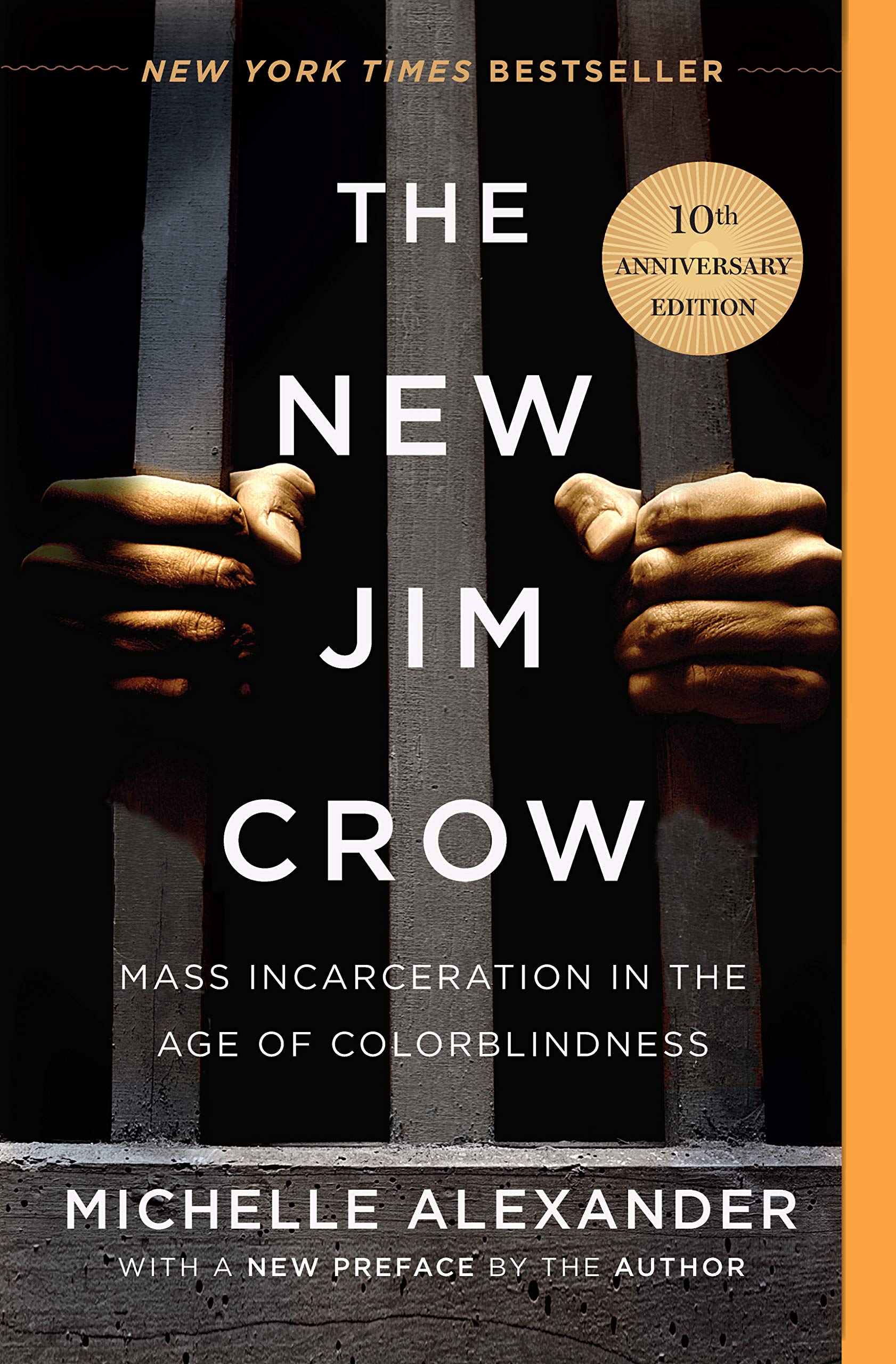
The New Jim Crow: Introduction–Chapter 1
In this award-winning book, civil rights lawyer Michelle Alexander argues that the American criminal justice system unfairly targets and penalizes African Americans, resulting in long-term harm to black communities.
Here are links to our lists for the book: Introduction–Chapter 1, Chapter 2, Chapter 3, Chapter 4, Chapter 5, Chapter 6
40 words
286 learners
Learn words with Flashcards and other activities
Definition First

Other learning activities
Full list of words from this list:
-
adage
a condensed but memorable saying embodying an important factCotton’s story illustrates, in many respects, the old adage “The more things change, the more they remain the same.”
-
egalitarian
favoring social equalityHundreds of years later, America is still not an egalitarian democracy.
-
caste
social status conferred by a system based on classTen years ago, I would have argued strenuously against the central claim made here—namely, that something akin to a racial caste system currently exists in the United States.
-
vestige
an indication that something has been presentI thought my job as a civil rights lawyer was to join with the allies of racial progress to resist attacks on affirmative action and to eliminate the vestiges of Jim Crow segregation, including our still separate and unequal system of education.
-
stratification
the act of arranging persons into classes or levelsI was familiar with the challenges associated with reforming institutions in which racial stratification is thought to be normal—the natural consequence of differences in education, culture, motivation, and, some still believe, innate ability.
-
smattering
a small number or amountThe activists who posted the sign on the telephone pole were not crazy; nor were the smattering of lawyers and advocates around the country who were beginning to connect the dots between our current system of mass incarceration and earlier forms of social control.
-
relegate
assign to a lower positionIn my experience, people who have been incarcerated rarely have difficulty identifying the parallels between these systems of social control. Once they are released, they are often denied the right to vote, excluded from juries, and relegated to a racially segregated and subordinated existence.
-
moratorium
suspension of an ongoing activityThese days, activists who advocate “a world without prisons” are often dismissed as quacks, but only a few decades ago, the notion that our society would be much better off without prisons—and that the end of prisons was more or less inevitable—not only dominated mainstream academic discourse in the field of criminology but also inspired a national campaign by reformers demanding a moratorium on prison construction.
-
egregious
conspicuously and outrageously bad or reprehensibleIn 1972, fewer than 350,000 people were being held in prisons and jails nationwide, compared with more than 2 million people today. The rate of incarceration in 1972 was at a level so low that it no longer seems in the realm of possibility, but for moratorium supporters, that magnitude of imprisonment was egregiously high.
-
incarceration
the state of being imprisonedMass incarceration—not attacks on affirmative action or lax civil rights enforcement—is the most damaging manifestation of the backlash against the Civil Rights Movement.
-
stigmatize
condemn or openly brand as disgracefulIt may be helpful, in attempting to understand the basic nature of the new caste system, to think of the criminal justice system—the entire collection of institutions and practices that comprise it—not as an independent system but rather as a gateway into a much larger system of racial stigmatization and permanent marginalization.
-
concomitant
following or accompanying as a consequenceWhile those strategies certainly had their place, the Civil Rights Act of 1964 and the concomitant cultural shift would never have occurred without the cultivation of a critical political consciousness in the African American community and the widespread, strategic activism that flowed from it.
-
pariah
a person who is rejected from society or homeThe criminalization and demonization of black men have turned the black community against itself, unraveling community and family relationships, decimating networks of mutual support, and intensifying the shame and self-hate experienced by the current pariah caste.
-
animus
a feeling of ill will arousing active hostilityMany of these claims, I note, are no more persuasive today than arguments made a hundred years ago by blacks and whites who claimed that racial segregation simply reflected “reality,” not racial animus, and that African Americans would be better off not challenging the Jim Crow system but should focus instead on improving themselves within it.
-
rhetoric
using language effectively to please or persuadeThe valiant efforts to abolish slavery and Jim Crow and to achieve greater racial equality have brought about significant changes in the legal framework of American society—new “rules of the game,” so to speak. These new rules have been justified by new rhetoric, new language, and a new social consensus, while producing many of the same results.
-
chattel
personal property, as opposed to real estateHere, in America, the idea of race emerged as a means of reconciling chattel slavery—as well as the extermination of American Indians—with the ideals of freedom preached by whites in the new colonies.
-
predicate
involve as a necessary condition or consequenceBy the mid-1770s, the system of bond labor had been thoroughly transformed into a racial caste system predicated on slavery.
-
espouse
choose and follow a theory, idea, policy, etc.Faith in the idea that people of the African race were bestial, that whites were inherently superior, and that slavery was, in fact, for blacks’ own good, served to alleviate the white conscience and reconcile the tension between slavery and the democratic ideals espoused by whites in the so-called New World.
-
intrinsically
with respect to its inherent natureWithout the labor of former slaves, the region’s economy would surely collapse, and without the institution of slavery, there was no longer a formal mechanism for maintaining racial hierarchy and preventing “amalgamation” with a group of people considered intrinsically inferior and vile.
-
destitute
poor enough to need help from othersPlantation owners were suddenly destitute, and state governments, shackled by war debt, were penniless.
-
habeas corpus
the right to a writ protecting against illegal imprisonmentThe new legislation also provided for federal supervision of voting and authorized the president to send the army and suspend the writ of habeas corpus in districts declared to be in a state of insurrection against the federal government.
-
redress
act of correcting an error or a fault or an evilConvicts had no meaningful legal rights at this time and no effective redress.
-
harbinger
something indicating the approach of something or someoneEven as convict leasing faded away, strategic forms of exploitation and repression emerged anew. As Blackmon notes: “The apparent demise...of leasing prisoners seemed a harbinger of a new day. But the harsher reality of the South was that the new post-Civil War neoslavery was evolving—not disappearing.”
-
despotism
dominance through threat of punishment and violenceAs described by Tom Watson, a prominent Populist leader, in a speech advocating a union between black and white farmers, “You are kept apart that you may be separately fleeced of your earnings. You are made to hate each other because upon that hatred is rested the keystone of the arch of financial despotism that enslaves you both. You are deceived and blinded that you may not see how this race antagonism perpetuates a monetary system which beggars both.”
-
comity
a state or atmosphere of harmony or mutual civilityAccording to Woodward, “It is altogether probable that during the brief Populist upheaval in the nineties Negroes and native whites achieved a greater comity of mind and harmony of political purpose than ever before or since in the South.”
-
disenfranchise
deprive of voting rightsBy the turn of the twentieth century, every state in the South had laws on the books that disenfranchised blacks and discriminated against them in virtually every sphere of life, lending sanction to a racial ostracism that extended to schools, churches, housing, jobs, restrooms, hotels, restaurants, hospitals, orphanages, prisons, funeral homes, morgues, and cemeteries.
-
polemic
a verbal or written attack, especially of a belief or dogmaIn Congress, North Carolina senator Sam Ervin Jr. drafted a racist polemic, the “Southern Manifesto,” which vowed to fight to maintain Jim Crow by all legal means.
-
miscegenation
marriage or reproduction by people of different racesMiscegenation laws were declared unconstitutional, and the rate of interracial marriage climbed.
-
subsume
contain or includeConservative politicians who embraced this rhetoric purposefully failed to distinguish between the direct action tactics of civil rights activists, violent rebellions in inner cities, and traditional crimes of an economic or violent nature. Instead, as Marc Mauer of the Sentencing Project has noted, “all of these phenomenon were subsumed under the heading of ‘crime in the streets.’”
-
rife
frequent, common, or widespreadWhile New Deal programs were rife with discrimination in their administration, they at least included blacks within the pool of beneficiaries—a development, historian Michael Klarman has noted, that was “sufficient to raise black hopes and expectations after decades of malign neglect from Washington.”
-
surreptitiously
in a secretive mannerSome conservative political strategists admitted that appealing to racial fears and antagonisms was central to this strategy, though it had to be done surreptitiously.
-
polarize
cause to divide into conflicting positionsWarren Weaver, a New York Times journalist who reviewed the book upon its release, observed that Phillips’s strategy largely depended upon creating and maintaining a racially polarized political environment.
-
pragmatism
the doctrine that practical consequences determine value“Full racial polarization is an essential ingredient of Phillips’s political pragmatism. He wants to see a black Democratic party, particularly in the South, because this will drive into the Republican party precisely the kind of anti-Negro whites who will help constitute the emerging majority. This even leads him to support some civil rights efforts.”
-
disaffected
discontented as toward authorityCondemning “welfare queens” and criminal “predators,” he rode into office with the strong support of disaffected whites—poor and working-class whites who felt betrayed by the Democratic Party’s embrace of the civil rights agenda.
-
implicit
suggested though not directly expressedTo great effect, Reagan echoed white frustration in race-neutral terms through implicit racial appeals.
-
intractable
difficult to manage or moldSome countries faced with rising drug crime or seemingly intractable rates of drug abuse and drug addiction chose the path of drug treatment, prevention, education, or economic investment.
-
disseminate
cause to become widely knownThe bonanza continued into 1989, as the media continued to disseminate claims that crack was an “epidemic,” a “plague,” “instantly addictive,” and extraordinarily dangerous—claims that have now been proven false or highly misleading.
-
partisan
devoted to a cause or political groupThe level of public concern about crime and drugs was only weakly correlated with actual crime rates, but highly correlated with political initiatives, campaigns, and partisan appeals.
-
precarious
not secure; beset with difficultiesNow, a new racial caste system—mass incarceration—was taking hold, as politicians of every stripe competed with each other to win the votes of poor and working-class whites, whose economic status was precarious, at best, and who felt threatened by racial reforms.
-
capitulate
surrender under agreed conditionsClinton eventually moved beyond crime and capitulated to the conservative racial agenda on welfare. This move, like his “get tough” rhetoric and policies, was part of a grand strategy articulated by the “new Democrats” to appeal to the elusive white swing voters. In so doing, Clinton—more than any other president—created the current racial undercaste.
Created on Fri Jun 19 17:45:00 EDT 2020
(updated Tue Jun 30 14:32:31 EDT 2020)
Sign up now (it’s free!)
Whether you’re a teacher or a learner,
Vocabulary.com can put you or your class
on the path to systematic vocabulary improvement.