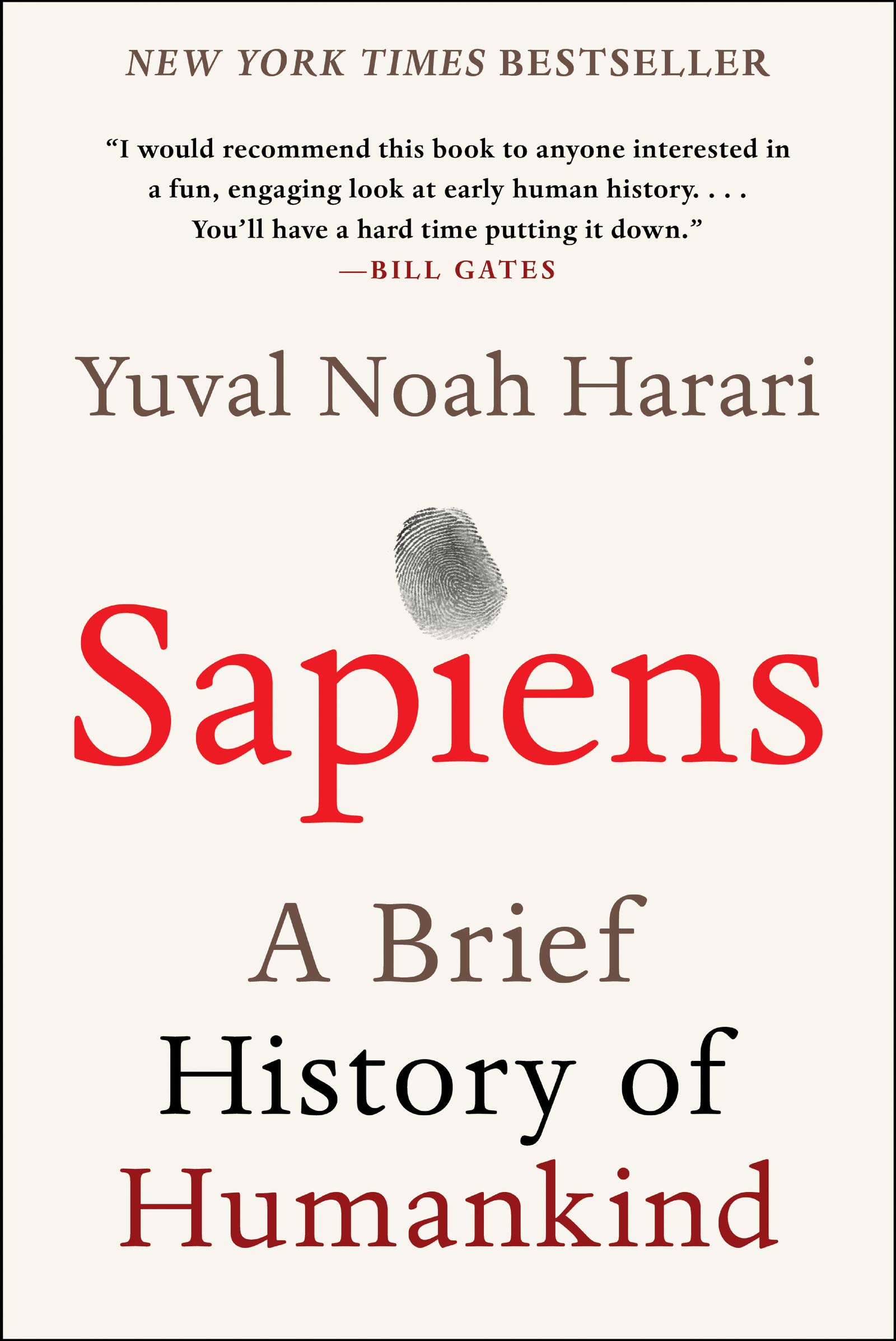
Sapiens: Chapters 3–4
Drawing on both historical and scientific research, this book traces the evolution of human beings over tens of thousands of years.
Here are links to our lists for the nonfiction text: Chapters 1–2, Chapters 3–4, Chapters 5–6, Chapters 7–8, Chapters 9–11, Chapters 12–13, Chapters 14–16, Chapter 17–Afterword
40 words
400 learners
Learn words with Flashcards and other activities
Definition First

Other learning activities
Full list of words from this list:
-
throes
violent pangs of sufferingToday’s affluent societies are in the throes of a plague of obesity, which is rapidly spreading to developing countries.
-
contentious
involving or likely to cause controversyThis ‘gorging gene’ theory is widely accepted. Other theories are far more contentious.
-
plethora
extreme excessIn play, we use a plethora of toys, from plastic cards to 100,000-seater stadiums.
-
cassock
a black garment reaching down to the anklesReligions bring the sacred into our lives with Gothic churches, Muslim mosques, Hindu ashrams, Torah scrolls, Tibetan prayer wheels, priestly cassocks, candles, incense, Christmas trees, matzah balls, tombstones and icons.
-
ubiquitous
being present everywhere at onceWe hardly notice how ubiquitous our stuff is until we have to move it to a new house.
-
extrapolate
gain knowledge of by generalizingA reliance on artefacts will thus bias an account of ancient hunter-gatherer life. One way to remedy this is to look at modern forager societies. These can be studied directly, by anthropological observation. But there are good reasons to be very careful in extrapolating from modern forager societies to ancient ones.
-
manifest
reveal its presence or make an appearanceThanks to the appearance of fiction, even people with the same genetic make-up who lived under similar ecological conditions were able to create very different imagined realities, which manifested themselves in different norms and values.
-
belligerent
characteristic of an enemy or one eager to fightOne band might have been belligerent and the other peaceful.
-
incontrovertible
impossible to deny or disproveExperts disagree about the exact date, but we have incontrovertible evidence of domesticated dogs from about 15,000 years ago.
-
sporadic
recurring in scattered or unpredictable instancesSociopolitical relations, too, tended to be sporadic. The tribe did not serve as a permanent political framework, and even if it had seasonal meeting places, there were no permanent towns or institutions.
-
notwithstanding
despite anything to the contraryNotwithstanding the popular image of ‘man the hunter’, gathering was Sapiens’ main activity, and it provided most of their calories, as well as raw materials such as flint, wood and bamboo.
-
inhospitable
unfavorable to life or growthWhile people in today’s affluent societies work an average of forty to forty-five hours a week, and people in the developing world work sixty and even eighty hours a week, hunter-gatherers living today in the most inhospitable of habitats—such as the Kalahari Desert—work on average for just thirty-five to forty-five hours a week.
-
scourge
something causing misery or deathMost of the infectious diseases that have plagued agricultural and industrial societies (such as smallpox, measles and tuberculosis) originated in domesticated animals and were transferred to humans only after the Agricultural Revolution. Ancient foragers, who had domesticated only dogs, were free of these scourges.
-
affluent
having an abundant supply of money or possessions of valueThe wholesome and varied diet, the relatively short working week, and the rarity of infectious diseases have led many experts to define pre-agricultural forager societies as ‘the original affluent societies’.
-
humdrum
tediously repetitious or lacking in varietyBut did they consider walnuts a delicacy or a humdrum staple?
-
animism
the doctrine that all natural objects have soulsAnimism (from anima, ‘soul’ or ‘spirit’ in Latin) is the belief that almost every place, every animal, every plant and every natural phenomenon has awareness and feelings, and can communicate directly with humans.
-
admonish
scold or reprimand; take to taskThe rock might be angry about something that people did and rejoice over some other action, the rock might admonish people or ask for favours.
-
mollify
cause to be more favorably inclinedHumans, for their part, can address the rock, to mollify or threaten it.
-
ethereal
of heaven or the spiritTheism (from ‘theos’, ‘god’ in Greek) is the view that the universal order is based on a hierarchical relationship between humans and a small group of ethereal entities called gods.
-
rubric
category nameThe generic rubric ‘theists’ covers Jewish rabbis from eighteenth-century Poland, witch-burning Puritans from seventeenth-century Massachusetts, Aztec priests from fifteenth-century Mexico, Sufi mystics from twelfth-century Iran, tenth-century Viking warriors, second-century Roman legionnaires, and first-century Chinese bureaucrats.
-
heretical
departing from accepted beliefs or standardsEach of these viewed the others’ beliefs and practices as weird and heretical.
-
hierarchical
classified by various criteria into successive levelsIt’s likely that different bands had different structures. Some may have been as hierarchical, tense and violent as the nastiest chimpanzee group, while others were as laid-back, peaceful and lascivious as a bunch of bonobos
-
lascivious
driven by lustIt’s likely that different bands had different structures. Some may have been as hierarchical, tense and violent as the nastiest chimpanzee group, while others were as laid-back, peaceful and lascivious as a bunch of bonobos.
-
abattoir
a building where animals are butcheredWhich better represents the world of the ancient foragers: the peaceful skeletons from Israel and Portugal, or the abattoirs of Jabl Sahaba and Ofnet?
-
exuberant
produced or growing in extreme abundancePlanet Earth was separated into several distinct ecosystems, each made up of a unique assembly of animals and plants. Homo sapiens was about to put an end to this biological exuberance.
-
vagary
an unexpected and inexplicable change in somethingSome scholars try to exonerate our species, placing the blame on the vagaries of the climate (the usual scapegoat in such cases).
-
flux
a state of constant changeIt’s common today to explain anything and everything as the result of climate change, but the truth is that earth’s climate never rests. It is in constant flux.
-
burgeon
grow and flourishDespite its burgeoning navigational abilities, Homo sapiens was still overwhelmingly a terrestrial menace.
-
ensuing
following immediately and as a result of what went beforeThirdly, mass extinctions akin to the archetypal Australian decimation occurred again and again in the ensuing millennia—whenever people settled another part of the Outer World.
-
irrefutable
impossible to deny or disproveIn these cases Sapiens guilt is irrefutable. For example, the megafauna of New Zealand—which had weathered the alleged ‘climate change’ of c. 45,000 years ago without a scratch—suffered devastating blows immediately after the first humans set foot on the islands.
-
lithe
moving and bending with easeHumans don’t come across as particularly dangerous. They don’t have long, sharp teeth or muscular, lithe bodies.
-
beset
assail or attack on all sidesThe climate changes that beset Australia about 45,000 years ago destabilised the ecosystem and made it particularly vulnerable.
-
juncture
a particular point in a process or activityHowever, humans appeared on the stage at just this critical juncture and pushed the brittle ecosystem into the abyss. The combination of climate change and human hunting is particularly devastating for large animals, since it attacks them from different angles.
-
arduous
taxing to the utmost; testing powers of enduranceThe first Americans arrived on foot, which they could do because, at the time, sea levels were low enough that a land bridge connected north-eastern Siberia with north-western Alaska. Not that it was easy—the journey was an arduous one, perhaps harder than the sea passage to Australia.
-
menagerie
a collection of live animals for study or displaySouth America hosted an even more exotic menagerie of large mammals, reptiles and birds.
-
exonerate
pronounce not guilty of criminal chargesAgain, some scholars try to exonerate Homo sapiens and blame climate change (which requires them to posit that, for some mysterious reason, the climate in the Caribbean islands remained static for 7,000 years while the rest of the western hemisphere warmed).
-
abet
assist or encourage, usually in some wrongdoingWe are the culprits. There is no way around that truth. Even if climate change abetted us, the human contribution was decisive.
-
befall
become of; happen toIf we combine the mass extinctions in Australia and America, and add the smaller-scale extinctions that took place as Homo sapiens spread over Afro-Asia—such as the extinction of all other human species—and the extinctions that occurred when ancient foragers settled remote islands such as Cuba, the inevitable conclusion is that the first wave of Sapiens colonisation was one of the biggest and swiftest ecological disasters to befall the animal kingdom.
-
eradicate
kill in large numbersIf we knew how many species we’ve already eradicated, we might be more motivated to protect those that still survive.
-
galley
the area for food preparation on a shipAmong all the world’s large creatures, the only survivors of the human flood will be humans themselves, and the farmyard animals that serve as galley slaves in Noah’s Ark.
Created on Mon Dec 23 18:08:48 EST 2019
(updated Thu Jan 30 15:24:37 EST 2020)
Sign up now (it’s free!)
Whether you’re a teacher or a learner,
Vocabulary.com can put you or your class
on the path to systematic vocabulary improvement.