Spooked: Dear Mr. Welles–Chapter 12
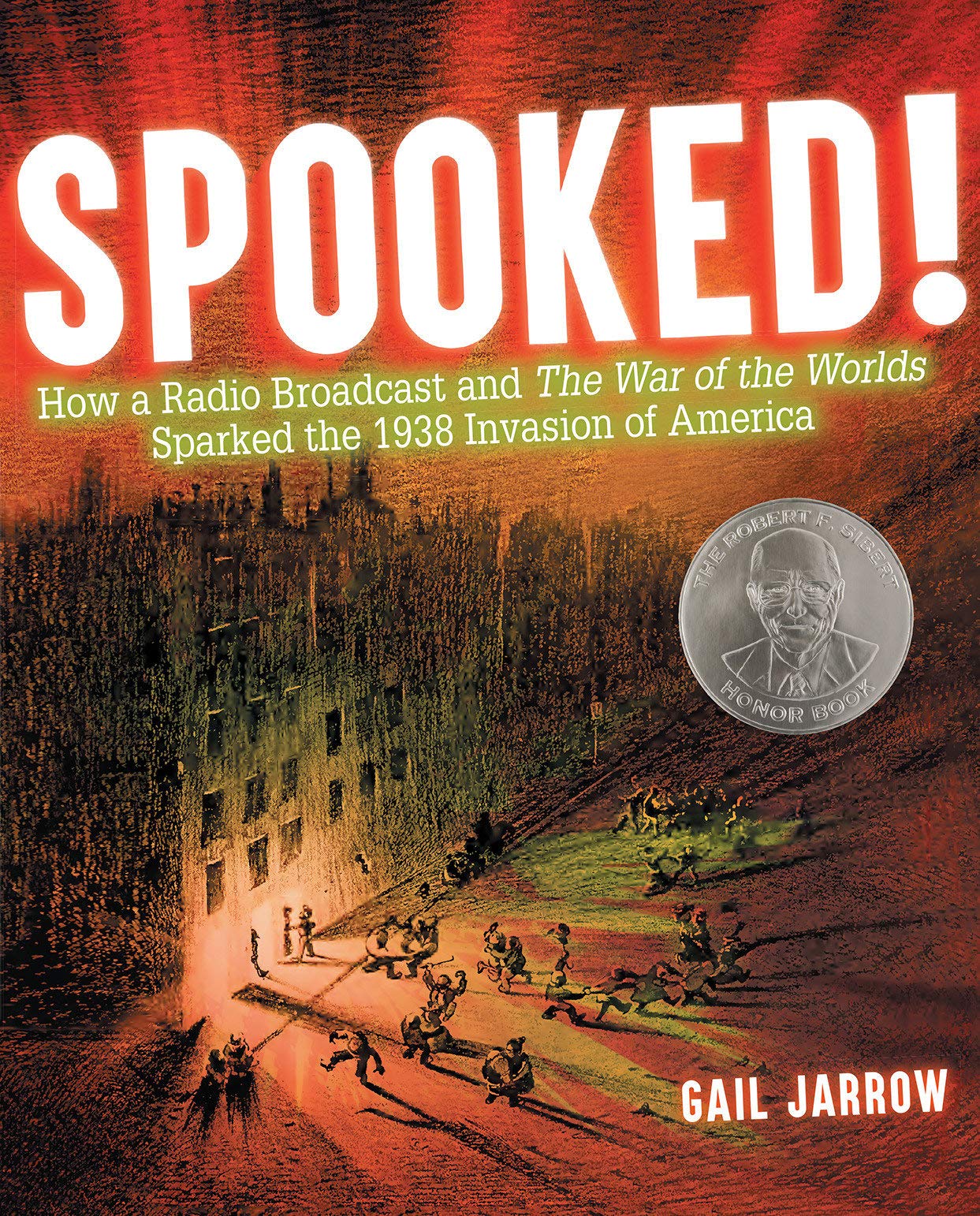
In 1938, Orson Welles performed a radio version of H.G. Wells's science fiction novel The War of the Worlds — and inadvertently sparked panic among listeners who believed they were tuned in to a real news broadcast about an alien invasion. This award-winning book tells the story behind the broadcast and explores the effects of false information in the media.
Here are links to our lists for the book: Chapters 1–2, Chapters 3–4, Chapters 5–7, Chapters 8–11, Dear Mr. Welles–Chapter 12, Dear FCC–Hoaxes
30 words
111 learners
Learn words with Flashcards and other activities
Definition First

Other learning activities
Full list of words from this list:
-
correspondence
communication by the exchange of lettersOne 1940 report claimed that nearly 1,800 people wrote to CBS, of which 60 percent were positive. This correspondence has been lost, however.
-
archives
collection of records especially about an institutionAbout 1,400 letters sent to Welles and The Mercury Theatre survive in library archives.
-
humdinger
something or someone of remarkable excellence“I listened to your radio play Sunday night and it was a humdinger.”
D. R. Davenport, Iowa -
mollycoddle
treat with excessive indulgence“These mollicoddled jitterbugs show what they’re made of. Just a bunch of cry babies.”
Mrs. S. S., Dearborn, Michigan -
menace
something that is a source of danger“You have made the radio a medium of deception which if allowed to continue could make the radio a menace.”
M. J., Elmwood Park, Illinois -
infernal
extremely evil or cruel“The infernal machines passed within a few blocks from my house...and I didn’t think to step outside to see them. After New York was destroyed we all went to bed.”
P. V. W., Elizabeth, New Jersey -
designing
concealing crafty intentions for advancing your own interestThe New York World-Telegram declared: “We don’t agree with those who are arguing that the Sunday night scare shows a need for strict government censorship of radio programs. On the contrary, we think it is evidence of how dangerous political control of radio might become. If so many people could be misled unintentionally, when the purpose was merely to entertain, what could designing politicians not do through control of broadcasting stations.”
-
propaganda
information that is spread to promote some causeTo resist propaganda, the columnist continued, people need to apply “a healthy skepticism” to what they read and hear.
-
mince
make less severe or harshInfluential opinion writer Dorothy Thompson did not mince words. In her newspaper column, which appeared nationwide on Wednesday, November 2, she wrote that Orson Welles had “shown up the incredible stupidity, lack of nerve[,] and ignorance of thousands.”
-
incite
provoke or stir upThe Mercury Theatre team deserved a medal for shining a warning light on the way European dictators like Hitler, Mussolini, and Stalin used radio to “incite hatreds, inflame masses,...abolish reason and maintain themselves in power.”
-
abolish
do away withThe Mercury Theatre team deserved a medal for shining a warning light on the way European dictators like Hitler, Mussolini, and Stalin used radio to “incite hatreds, inflame masses,...abolish reason and maintain themselves in power.”
-
folly
foolish or senseless behaviorThe London Times of Great Britain pointed out the folly of the United States in the face of serious international threats.
-
deem
judge or regard in a particular way"Here is a nation which, alone of big nations, has deemed it unnecessary to rehearse for protection against attack from the air by fellow-beings on this earth and suddenly believes itself—and for little enough reason—faced with a more fearful attack from another world.”
-
irate
feeling or showing extreme angerIrate
People who had been duped by the broadcast were angry at Welles and CBS. -
dupe
fool or hoaxIrate
People who had been duped by the broadcast were angry at Welles and CBS. -
cohort
a company of companions or supportersSeveral letter writers complained that Orson Welles and his cohorts intentionally misled the public by naming actual towns, roads, and government agencies.
-
reverence
a feeling of profound respect for someone or somethingOne North Carolina woman wrote: "Who was I to question Princeton scientist the War [Department] at Washington the Red Cross and other names for which we have the greatest respect and reverance [sic], I thot [sic] there must be something to it.”
-
assume
take on titles, offices, duties, or responsibilitiesLetters called for the FCC to remove Welles and CBS from the air, fine them, or assume control of all radio broadcasts because the networks had shown themselves to be irresponsible.
-
undermine
weaken or impair, especially graduallyA man from New Jersey wrote that fake news undermines “the prestige of the radio as a dispenser of news.”
-
detrimental
causing harm or injuryThe president of the Association of Radio News Editors and Writers weighed in with a telegram to the FCC: ‘“News Bulletin’ and ‘Flash’...when misplaced tend to confuse the listener and lessen his attention when true news is delivered….[It] is detrimental to newscasting and dangerous.”
-
gullible
naive and easily deceived or trickedSome editorial writers pointed out that gullible Americans were susceptible to propaganda such as the kind used in Germany.
-
susceptible
easily influenced mentally or emotionallySome editorial writers pointed out that gullible Americans were susceptible to propaganda such as the kind used in Germany.
-
hoax
something intended to deceiveSeveral people who wrote letters recounted how they sniffed out the hoax.
-
static
crackling or hissing noise caused by electrical interferenceIf Martians attacked and carried out that much destruction, she reasoned, they’d create “so much static that a radio program could not even be heard.”
-
mobilize
call to arms; of military personnelOne New Yorker noted “that the entire land forces of the American army in the East [was] mobilized in a few seconds,” New Jersey conquered, and the population of New York City either evacuated or annihilated "within a few minutes.”
-
commission
a special group delegated to consider some matterThe Communications Act of 1934 did not give the commission the authority to censor programs, he said.
-
damages
a sum of money paid in compensation for loss or injuryOrson Welles, the Mercury, and CBS faced thousands of dollars worth of lawsuits for personal injury, mental anguish, and damages.
-
liable
held legally responsibleFortunately for Welles and Houseman, their lawyer had added a clause to their CBS contract ensuring that they and the Mercury would not be liable for their show’s content.
-
discredit
cause to be distrusted or disbelievedThe story about the woman who broke her arm was discredited because the victim was an actress eager to get her photograph in the newspapers.
-
persecution
causing someone to sufferAt the end of the year, newspaper editors and press groups listed the Martian broadcast among 1938’s biggest news stories. That was saying something in light of Hitler’s rise in Europe, the Nazi persecution of Jews, the New England hurricane, the business and employment slump, and the war between China and Japan.
Created on Wed May 01 13:33:13 EDT 2019
(updated Wed May 01 14:04:16 EDT 2019)
Sign up now (it’s free!)
Whether you’re a teacher or a learner,
Vocabulary.com can put you or your class
on the path to systematic vocabulary improvement.