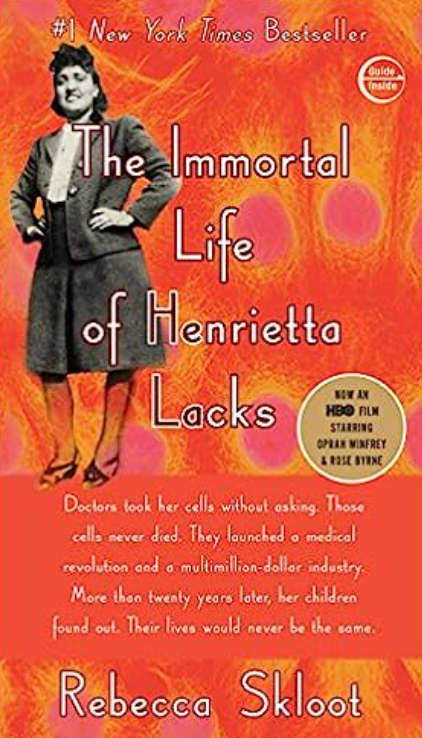
The Immortal Life of Henrietta Lacks: "Where They Are Now"–Afterword
This biography immortalizes a woman whose cancerous cells contributed to medical breakthroughs around the world.
Here are links to our lists for the book: Foreword–"Deborah's Voice", Part 1, Part 2, Part 3, "Where They Are Now"–Afterword
15 words
1473 learners
Learn words with Flashcards and other activities
Definition First

Other learning activities
Full list of words from this list:
-
emeritus
honorably retired from assigned dutiesHoward Jones, Henrietta’s doctor, is an emeritus professor at Johns Hopkins and Eastern Virginia Medical School.
-
mandate
make obligatoryThey also house blood samples taken from most infants born in the United States since the late sixties, when states started mandating the screening of all newborns for genetic diseases.
-
excise
remove by cuttingAnd at this point no case law has fully clarified whether you own or have the right to control your tissues. When they’re part of your body, they’re clearly yours. Once they’re excised, your rights get murky.
-
stringent
demanding strict attention to rules and proceduresAccording to Judith Greenberg, director of the Division of Genetics and Developmental Biology at the National Institute of General Medical Science, the NIH now has “very stringent guidelines” requiring consent for any tissues collected for their banks.
-
status quo
the existing state of affairsSupporters of the status quo argue that passing new, tissue-specific legislation is unnecessary, and that the current oversight practices are enough.
-
conscientious objector
one who refuses to serve in the army on moral groundsLori Andrews, director of the Institute for Science, Law and Technology at the Illinois Institute of Technology, wants something more drastic: she has called for people to get policymakers’ attention by becoming “conscientious objectors in the DNA draft” and refusing to give tissue samples.
-
provost
a high-ranking university administratorDavid Korn, vice provost for research at Harvard University, argues that giving patients control over their tissues is shortsighted.
-
autonomy
personal independence“Science is not the highest value in society,” Andrews says, pointing instead to things like autonomy and personal freedom.
-
moderate
being within reasonable or average limitsWayne Grody, director of the Diagnostic Molecular Pathology Laboratory at the University of California, Los Angeles, was once a fierce opponent of consent for tissue research. But after years of debating people like Andrews and Clayton, he’s become more moderate.
-
distinguish
mark as different“These tissues enter a pipeline of millions of other samples,” he said. “How are you going to distinguish, well, this patient said we can study colon cancer; the next one said we can do anything we want, but we can’t commercialize it. I mean, do they all have to be color-coded?”
-
royalty
payment to the holder of a patent or copyright or resourceVarious policy analysts, scientists, philosophers, and ethicists have suggested ways to compensate tissue donors: creating a Social Security-like system in which each donation entitles a person to increasing levels of compensation; giving donors tax write-offs; developing a royalty system like the one used for compensating musicians when their songs are played on the radio; requiring that a percentage of profits from tissue research go to scientific or medical charities...
-
desist
stop performing some actionScientists who’ve gone ahead with research involving the breast-cancer genes without Myriad’s permission have found themselves on the receiving end of cease-and- desist letters and threats of litigation."Desist" and "cease" are synonyms that mean to stop doing something. Using both words in a legal order seems to give it more force.
-
pro bono
done for the public good without compensationLori Andrews, who has worked pro bono on all of the most important biological ownership cases to date, including the current breast cancer gene suit, says that many scientists have interfered with science in precisely the way courts always worried tissue donors might do.
-
proprietary
protected by trademark or patent or copyrightNow there are patents and proprietary information where there once was free information flow. “Researchers have become entrepreneurs. That’s boomed our economy and created incentives to do research. But it’s also brought problems, like secrecy and arguments over who owns what.”
-
ambiguous
open to two or more interpretationsIn 1999, President Clinton’s National Bioethics Advisory Commission (NBAC) issued a report saying that federal oversight of tissue research was “inadequate” and “ambiguous.”
Created on Mon Jul 29 13:56:28 EDT 2013
(updated Tue Jul 01 19:00:35 EDT 2025)
Sign up now (it’s free!)
Whether you’re a teacher or a learner,
Vocabulary.com can put you or your class
on the path to systematic vocabulary improvement.