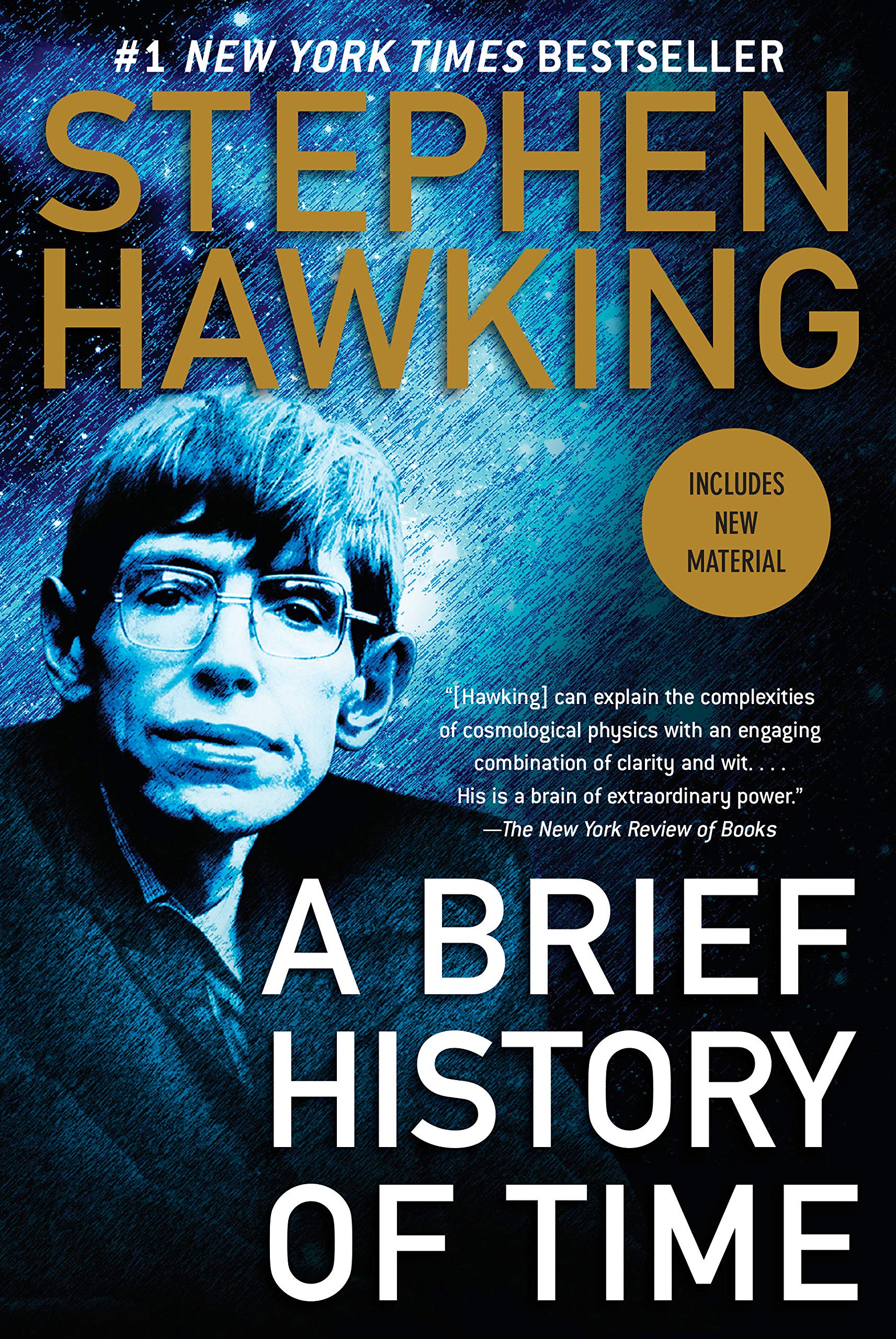
A Brief History of Time: Einstein–Newton
In this groundbreaking book, renowned physicist Stephen Hawking attempts to answer some of the most formidable questions about the universe.
Here are links to our lists for the book: Foreword–Chapter 2, Chapters 3–5, Chapters 6–8, Chapters 9–12, Einstein–Newton
15 words
353 learners
Learn words with Flashcards and other activities
Definition First

Other learning activities
Full list of words from this list:
-
demonstration
a public display of group feelingsSickened by what he saw as the waste of human lives, he became involved in antiwar demonstrations.
-
advocacy
active support of an idea or causeHis advocacy of civil disobedience and public encouragement of people to refuse conscription did little to endear him to his colleagues.
-
reconciliation
the reestablishment of cordial relationsThen, following the war, he directed his efforts toward reconciliation and improving international relations.
-
renounce
turn away from; give upIn the face of the Nazi threat, Einstein renounced pacifism, and eventually, fearing that German scientists would build a nuclear bomb, proposed that the United States should develop its own.
-
detonate
cause to burst with a violent release of energyBut even before the first atomic bomb had been detonated, he was publicly warning of the dangers of nuclear war and proposing international control of nuclear weaponry.
-
ecclesiastical
of or associated with a churchGalileo, worried by this, traveled to Rome to speak to the ecclesiastical authorities.
-
allegorical
characteristic of or containing a symbolic meaning or moralHe argued that the Bible was not intended to tell us anything about scientific theories, and that it was usual to assume that, where the Bible conflicted with common sense, it was being allegorical.
-
omnipotence
the state of having unlimited powerHe failed, but he did manage to get permission to write a book discussing both Aristotelian and Copernican theories, on two conditions: he would not take sides and would come to the conclusion that man could in any case not determine how the world worked because God could bring about the same effects in ways unimagined by man, who could not place restrictions on God’s omnipotence.
-
contravene
go against, as of rules and lawsThe Pope argued that although the book had the official blessing of the censors, Galileo had nevertheless contravened the 1616 decree.
-
inquisition
a severe interrogationHe brought Galileo before the Inquisition, who sentenced him to house arrest for life and commanded him to publicly renounce Copernicanism.
-
prominence
the state of being widely known or eminentFollowing publication of Principia Mathematica—surely the most influential book ever written in physics—Newton had risen rapidly into public prominence.
-
contender
the contestant you hope to defeatAlthough we now know that Newton discovered calculus years before Leibniz, he published his work much later. A major row ensued over who had been first, with scientists vigorously defending both contenders.
-
plagiarism
taking someone's words or ideas as if they were your ownNewton then wrote the committee’s report himself and had the Royal Society publish it, officially accusing Leibniz of plagiarism.
-
lucrative
producing a sizeable profitHe had been active in anti-Catholic politics at Cambridge, and later in Parliament, and was rewarded eventually with the lucrative post of Warden of the Royal Mint.
-
vitriol
abusive or venomous language to express blame or censureHere he used his talents for deviousness and vitriol in a more socially acceptable way, successfully conducting a major campaign against counterfeiting, even sending several men to their death on the gallows.
Created on Tue Jun 14 09:41:05 EDT 2016
(updated Thu Jul 31 15:18:19 EDT 2025)
Sign up now (it’s free!)
Whether you’re a teacher or a learner,
Vocabulary.com can put you or your class
on the path to systematic vocabulary improvement.