Vocabulary.com Blog Contributor
Adam Cooper

Adam Cooper studied linguistics at Brandeis University and The University of Chicago. Since 2010, he has been working with The Endangered Language Alliance in New York City on documentation and preservation projects.
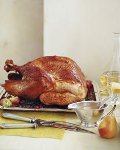 Last year for Thanksgiving, I did something gastronomically delicious but linguistically impossible: I dry-brined my turkey. The very word brine implies water. Tons of seafaring stories reference the briny deep as a euphemism for the salty sea. So what could a dry-brine possibly be?
Continue reading...
Last year for Thanksgiving, I did something gastronomically delicious but linguistically impossible: I dry-brined my turkey. The very word brine implies water. Tons of seafaring stories reference the briny deep as a euphemism for the salty sea. So what could a dry-brine possibly be?
Continue reading...
 Ripped. Slapped. Poked. Swatted. If you've been watching the World Series, you've probably heard some of these verbs for hitting a baseball. Sports can involve a lot of repetition, so to make it different and exciting, sportscasters often use a wide variety of terms to describe the action. It is this variety that makes sports lingo an interesting object of study.
Continue reading...
Ripped. Slapped. Poked. Swatted. If you've been watching the World Series, you've probably heard some of these verbs for hitting a baseball. Sports can involve a lot of repetition, so to make it different and exciting, sportscasters often use a wide variety of terms to describe the action. It is this variety that makes sports lingo an interesting object of study.
Continue reading...
 One of the things everyone remembers about Shakespeare, whether they spent a few weeks on one play in high school or an entire semester on several plays in college, is that he wrote in iambic pentameter. Some may also have vague recollections about their teacher explaining that iambic pentameter isn't difficult to understand, because English "naturally" falls into its rhythms.
Continue reading...
One of the things everyone remembers about Shakespeare, whether they spent a few weeks on one play in high school or an entire semester on several plays in college, is that he wrote in iambic pentameter. Some may also have vague recollections about their teacher explaining that iambic pentameter isn't difficult to understand, because English "naturally" falls into its rhythms.
Continue reading...
 Words can be thought of as historical artifacts; they carry with them a stamp of time and place, and sometimes it's important to take the long view and think about words outside their immediate context and use a broader perspective.
Continue reading...
Words can be thought of as historical artifacts; they carry with them a stamp of time and place, and sometimes it's important to take the long view and think about words outside their immediate context and use a broader perspective.
Continue reading...
Word CountWriters Talk About Writing
Lyrical Accidents: When Pop Music Vocab Goes Wrong
Sometimes lyrics are "bad to the bone". . .others are just wrong
"In the mood for dance"? "My heart bleeded"? While creating vocabulary lists of unusual words found in pop music, writer and linguist Adam Cooper ran across some words that go beyond peculiarity and into the realm of error.
Continue reading...
High/low, yes/no, black/white. There's something reassuring about opposites. A lot of vocabulary teaching is done using pairs of opposites, and with good reason: learners really feel they have a handle on a concept if they grasp its antithesis. There are, however, some other concept families that are best learned using three terms — triples — that provide a middle ground which in turn enhances all three concepts.
Continue reading...
Sign up now (it’s free!)
Whether you’re a teacher or a learner,
Vocabulary.com can put you or your class
on the path to systematic vocabulary improvement.