Vocabulary.com Blog
Articles from 2011
Tips & Tricks
Genre Study: Resources for Teaching Science Fiction
Prep Students for Close Reading with Curated Vocabulary Lists
 Explore our comprehensive selection of science fiction resources and assign engaging, text-based activities to boost your students' comprehension.
Continue reading...
Explore our comprehensive selection of science fiction resources and assign engaging, text-based activities to boost your students' comprehension.
Continue reading...
Announcements
Enter Our Educators-Only November Book Giveaway!
This Month's Prize: Around the World in Fiction
 We want to help build classroom libraries, one batch of books at a time! Learn more about who's eligible and how to enter.
Continue reading...
We want to help build classroom libraries, one batch of books at a time! Learn more about who's eligible and how to enter.
Continue reading...
Topics:
Books
Announcements
There's Room for Every Student on This Team
Inclusivity, Camaraderie Define the Vocabulary Bowl
 Learn how the Bowl centers around giving more students the opportunity to experience more learning.
Continue reading...
Learn how the Bowl centers around giving more students the opportunity to experience more learning.
Continue reading...
Announcements
Who Can Gobble Up the Most Words Over Thanksgiving Break?
Host an "Away With Words" Vocab Challenge
 Keep the learning going strong during the upcoming break with some friendly competition!
Continue reading...
Keep the learning going strong during the upcoming break with some friendly competition!
Continue reading...
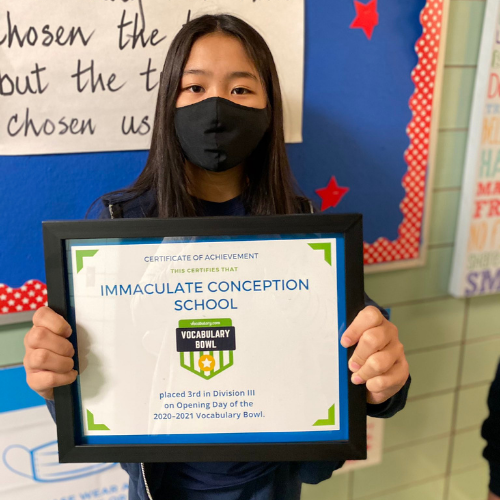 Where does your school stack up on the Vocab Bowl leaderboards? Check out the latest highlights and shoutouts.
Continue reading...
Where does your school stack up on the Vocab Bowl leaderboards? Check out the latest highlights and shoutouts.
Continue reading...
Word CountWriters Talk About Writing
Word Tasting Note: "Hark"
"Hark! The herald angels sing..." Or is it "Hark the herald, angels sing"?
 On his Sesquiotica blog, writer, editor, and designer James Harbeck has a regular feature that he calls "Word Tasting Notes." "Words are delicious and intoxicating," Harbeck writes. "So why not taste them like a fine wine?" Here, he delves into the history of a word we frequently hear (or mishear) during the holiday season: hark.
Continue reading...
On his Sesquiotica blog, writer, editor, and designer James Harbeck has a regular feature that he calls "Word Tasting Notes." "Words are delicious and intoxicating," Harbeck writes. "So why not taste them like a fine wine?" Here, he delves into the history of a word we frequently hear (or mishear) during the holiday season: hark.
Continue reading...
Word RoutesExploring the pathways of our lexicon
Passing Away or Kicking the Bucket? The Lexicon of Dying
How English, like other languages, provides many expressions for death.
Death has been in the news lately, with the passing of North Korean dictator Kim Jong-Il and former Czech president Vaclav Havel within hours of each other. Despite the very different legacies of the two world leaders, most English-language news outlets used the same wording to describe their deaths: in obituaries, both Kim and Havel simply died. But English, like many other world languages, has a rich vocabulary of terms for dying, from the blunt to the euphemistic.
Continue reading...
Sign up now (it’s free!)
Whether you’re a teacher or a learner,
Vocabulary.com can put you or your class
on the path to systematic vocabulary improvement.