Vocabulary.com Blog
Articles from October, 2011
Behind the DictionaryLexicographers Talk About Language
Hallow, What's This?
The name of the holiday "Halloween" has a peculiar past.
 As most histories of Halloween will tell you, Hallowe'en (or Halloween) is a shortened version of All-Hallow(s)-Eve, but how and why did eve turn into e'en? For that matter, what is a hallow? Why did the all get dropped?
Continue reading...
As most histories of Halloween will tell you, Hallowe'en (or Halloween) is a shortened version of All-Hallow(s)-Eve, but how and why did eve turn into e'en? For that matter, what is a hallow? Why did the all get dropped?
Continue reading...
Word RoutesExploring the pathways of our lexicon
David Henry Hwang Traverses the Language Barrier in "Chinglish"
A new Broadway comedy finds humor in the dangers of mistranslation.
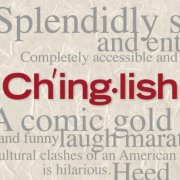 A new play is opening tonight on Broadway, and it's a treat for language lovers. It's called "Chinglish," and it was written by David Henry Hwang, who won a Tony Award for "M. Butterfly." I had a chance to talk to Hwang about his comic exploration of the perils of cross-linguistic misunderstanding.
Continue reading...
A new play is opening tonight on Broadway, and it's a treat for language lovers. It's called "Chinglish," and it was written by David Henry Hwang, who won a Tony Award for "M. Butterfly." I had a chance to talk to Hwang about his comic exploration of the perils of cross-linguistic misunderstanding.
Continue reading...
CandlepowerAd and marketing creatives
Mass-Market Artisans
Everything's going artisanal these days, from pizza to dog treats.
 In September, Domino's Pizza -- the second-largest pizza chain in the United States, with annual revenue approaching $1.5 billion -- introduced "Artisan Pizzas" to its 5,000 stores nationwide. Are you picturing skilled workers up to their elbows in whole-grain flour and locally sourced tomatoes, lovingly patting each pie into a charmingly irregular shape? Well, forget about it.
Continue reading...
In September, Domino's Pizza -- the second-largest pizza chain in the United States, with annual revenue approaching $1.5 billion -- introduced "Artisan Pizzas" to its 5,000 stores nationwide. Are you picturing skilled workers up to their elbows in whole-grain flour and locally sourced tomatoes, lovingly patting each pie into a charmingly irregular shape? Well, forget about it.
Continue reading...
Word RoutesExploring the pathways of our lexicon
Now Pitching in the World Series: The Man They Call "Scrabble"
Marc Rzepczynski is the latest baseball player with a Scrabble-friendly name.
In this year's World Series, one name in particular will likely catch the eye of even casual baseball fans. In the late innings of the first two games, a relief pitcher for the St. Louis Cardinals came in to face the Texas Rangers: Marc Rzepczynski. The announcers were clearly ready for Rzepczynski's appearance and pronounced his name smoothly (as "zep-CHIN-ski"), helpfully explaining that his nickname is "Scrabble." So how does Rzepczynski stack up against other hard-to-spell baseball names?
Continue reading...
Dog EaredBooks we love
The Birth of "Webster's Dictionary"
Noah Webster revolutionized American lexicography, and the American language.
 Yesterday, October 16, was National Dictionary Day, celebrated annually on the birthday of the great American lexicographer Noah Webster. Today the "Webster" name is practically synonymous with dictionaries, but how did the first "Webster's Dictionary" come to be? In this excerpt from The Forgotten Founding Father, Joshua Kendall recounts the publication of Webster's Compendious Dictionary in 1806, the first dictionary to bear his name and the first to feature his "American" spelling.
Continue reading...
Yesterday, October 16, was National Dictionary Day, celebrated annually on the birthday of the great American lexicographer Noah Webster. Today the "Webster" name is practically synonymous with dictionaries, but how did the first "Webster's Dictionary" come to be? In this excerpt from The Forgotten Founding Father, Joshua Kendall recounts the publication of Webster's Compendious Dictionary in 1806, the first dictionary to bear his name and the first to feature his "American" spelling.
Continue reading...
Word RoutesExploring the pathways of our lexicon
Occupying Word Street
The Occupy Wall Street movement has developed its own lexicon, starting with "occupy" itself.
The public protest over economic inequalities known as "Occupy Wall Street" has been going on nearly a month now, with the original demonstration in Manhattan's Financial District spreading to cities around the world. Thanks to the success of the movement, the lingo of the protesters has spread quickly, with the verb occupy in particular becoming a kind of rallying cry.
Continue reading...
Word CountWriters Talk About Writing
Ice Water, Ice Cream, but No Ice Tea!
Sometimes we lose the "-d" in compounds like "ice(d) cream," and sometimes we don't.
 Ever wonder why we say "ice" water and "ice" cream but "iced" tea? And should there be a "d" in "didn't use(d) to"? Merrill Perlman explains when the "d " is necessary.
Continue reading...
Ever wonder why we say "ice" water and "ice" cream but "iced" tea? And should there be a "d" in "didn't use(d) to"? Merrill Perlman explains when the "d " is necessary.
Continue reading...
Sign up now (it’s free!)
Whether you’re a teacher or a learner,
Vocabulary.com can put you or your class
on the path to systematic vocabulary improvement.