Vocabulary.com Blog
Articles from August, 2011
 Yesterday we heard from University of Illinois English professor Dennis Baron on the announcement of new words added to Merriam-Webster's dictionary. Here is another perspective, from Baltimore Sun copy editor John E. McIntyre, who argues that journalists reporting on new words often misconstrue the purpose of dictionaries.
Continue reading...
Yesterday we heard from University of Illinois English professor Dennis Baron on the announcement of new words added to Merriam-Webster's dictionary. Here is another perspective, from Baltimore Sun copy editor John E. McIntyre, who argues that journalists reporting on new words often misconstrue the purpose of dictionaries.
Continue reading...
 It's back to school, and that means it's time for dictionaries to trot out their annual lists of new words. Dictionary-maker Merriam-Webster recently released a list of 150 words just added to its new Collegiate Dictionary for 2011, including cougar, a middle-aged woman seeking a romantic relationship with a younger man, boomerang child, a young adult who returns to live at home for financial reasons, and social media -- if you don't know what that means, then you're still living in the last century.
Continue reading...
It's back to school, and that means it's time for dictionaries to trot out their annual lists of new words. Dictionary-maker Merriam-Webster recently released a list of 150 words just added to its new Collegiate Dictionary for 2011, including cougar, a middle-aged woman seeking a romantic relationship with a younger man, boomerang child, a young adult who returns to live at home for financial reasons, and social media -- if you don't know what that means, then you're still living in the last century.
Continue reading...
Word RoutesExploring the pathways of our lexicon
Temblor Shakes the East Coast (or Was it a Tremblor?)
Yesterday, the east coast of the United States was struck by a 5.8-magnitude earthquake — or, as it was frequently described in news accounts, a "temblor." Fortunately, the damage caused by the quake was limited, so instead we can contemplate the question: what the heck is a temblor? Or should the word be tremblor?
Continue reading...
Blog Excerpts
Woot! New Words from the Concise OED
The latest edition of the Concise Oxford English Dictionary (not to be confused with the giant OED itself) has announced some of the latest words to make the cut. Among them are jeggings, mankini, retweet, sexting, and woot. Don't know what these words mean? Check out the announcement of the new words on OUPblog, and read more about the century-old dictionary here.
When I go on radio shows to talk about English language usage, talk inevitably turns to words and phrases that people find annoying. (The topic is sure to light up the call-in lines.) Among the top peeves I hear about are three expressions that get used in an inverted fashion: literally used non-literally to emphasize a figure of speech, irregardless used to mean regardless, and could care less used to mean couldn't care less. What's with all the flip-flopping?
Continue reading...
 Earlier this week we featured an excerpt from the linguist John McWhorter's new book, What Language Is, in which he explains how the English language is essentially "disheveled." Here, in a second excerpt, McWhorter considers some questions that the chaotic history of English raises.
Continue reading...
Earlier this week we featured an excerpt from the linguist John McWhorter's new book, What Language Is, in which he explains how the English language is essentially "disheveled." Here, in a second excerpt, McWhorter considers some questions that the chaotic history of English raises.
Continue reading...
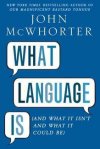 In his new book, What Language Is, the linguist John McWhorter takes the reader on a guided tour of language as it really is, not how we might assume it to be. One of his keys to understanding language the way a linguist does is to appreciate that it is inherently messy, or "disheveled," as he puts it. In this excerpt, McWhorter uses the history of English as his example of just how disheveled language can be.
Continue reading...
In his new book, What Language Is, the linguist John McWhorter takes the reader on a guided tour of language as it really is, not how we might assume it to be. One of his keys to understanding language the way a linguist does is to appreciate that it is inherently messy, or "disheveled," as he puts it. In this excerpt, McWhorter uses the history of English as his example of just how disheveled language can be.
Continue reading...
Sign up now (it’s free!)
Whether you’re a teacher or a learner,
Vocabulary.com can put you or your class
on the path to systematic vocabulary improvement.